 ChipApex | Global Electronic Components Supplier
SEARCH
Search Product
Search Post
— IC芯片 | 连接器 | 传感器 | 被动器件 —
Search productSearch post
— IC芯片 | 连接器 | 传感器 | 被动器件 —
Consult the customer manager about the wholesale price.
consultation hotline:86-132-6715-2157
email:[email protected]
Contact the product manager for consultation. One-stop consultation is available.
Do you want a lower wholesale price? Please send us your inquiry and we will reply immediately.
The HMC1000LP5ETR is a monolithic microwave integrated circuit (MMIC) band reject filter operating from 3.6 to 12.2 GHz. It features user-selectable rejection frequency via two control voltages, Vt1 and Vt2, ranging from 0 to 14 VDC with ±1 mA current capability. The device offers four tuning modes for full-band frequency selection, low/high-band narrowing, or bandwidth adjustment. Key electrical parameters include -162 dBc/Hz residual phase noise at 100 kHz offset, less than 200 ns phase settling time, and a rejection band center drift rate of -0.3 MHz/°C. It operates within an ambient temperature range of -40°C to +85°C.
Verify component authenticity through authorized Analog Devices channels due to obsolete status. Confirm package marking matches H1000 lot identifiers. Ensure handling precautions are followed as the device is electrostatic sensitive. Validate that the specific EOL notification applies to the intended production timeline.
Select this component when wideband tunable rejection between 3.6 and 12.2 GHz is required. Evaluate thermal resistance of 40°C/W for junction temperature management. Consider the need for low-noise driver circuits to optimize residual phase noise performance across the tuning range.
This MMIC belongs to the Hittite Microwave Corporation portfolio, now part of Analog Devices Inc. It represents a surface-mount technology solution designed for integration into compact RF front-ends. The device utilizes a leadframe construction with copper alloy leads and matte tin finish.
Public confirmed substitute part numbers are not available in the provided documentation. As the product is marked obsolete, engineering change orders should reference official discontinuance notifications for potential qualified replacements.
The absolute maximum rating for the frequency control voltage (Vfctl) is -0.5 V to +15 V.
The rejection band center frequency exhibits a drift rate of -0.3 MHz per degree Celsius over the operating temperature range.
The tuning speed includes phase settling to within 10 degrees in less than 200 nanoseconds, which accounts for a typical 40 nanosecond tuning voltage ramp from the driver.
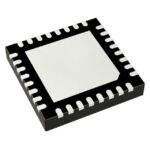 HMC1000LP5ETR
The activity of extra discounts on wholesale prices is in full swing…
Please fill in your contact information and we will send you the latest wholesale price list.





