 ChipApex | Global Electronic Components Supplier
SEARCH
Search Product
Search Post
— IC芯片 | 连接器 | 传感器 | 被动器件 —
Search productSearch post
— IC芯片 | 连接器 | 传感器 | 被动器件 —
Consult the customer manager about the wholesale price.
consultation hotline:86-132-6715-2157
email:[email protected]
Contact the product manager for consultation. One-stop consultation is available.
Do you want a lower wholesale price? Please send us your inquiry and we will reply immediately.
The HMC434 is a GaAs HBT MMIC divide-by-8 prescaler operating from near DC (square wave) or 200 MHz (sine wave) to 8 GHz. It utilizes InGaP/GaAs technology in a 6-lead SOT-23 package. The device runs on a single 3 Vdc supply (2.7 V to 3.3 V range). Key electrical specifications include an additive single-sideband phase noise of -150 dBc/Hz at a 100 kHz offset. It features single-ended inputs and outputs, supporting operation temperatures from -40°C to +85°C.
Verify current availability status as the standard HMC434 may be subject to obsolescence notices. Confirm specific package variants such as cut tape or reel options if required for assembly. Ensure compliance with RoHS directives and check for enhanced product (EP) versions if higher reliability standards are necessary for the intended application environment.
Select the HMC434 when a general-purpose, high-speed divide-by-8 prescaler is needed within the 8 GHz limit. Consider the SOT-23-6 package for space-constrained surface-mount designs. Evaluate the -150 dBc/Hz phase noise specification against system jitter requirements. Verify that the single-ended interface matches the surrounding RF chain topology without requiring additional baluns.
The HMC434 belongs to Analog Devices' portfolio of monolithic microwave integrated circuits designed for RF applications. It is part of a family of prescalers offering various division ratios and frequency ranges. The device leverages mature GaAs HBT processes to deliver robust performance in consumer and industrial wireless infrastructure.
Check for HMC434SRJZ-EP-R7 as an enhanced product variant with similar functionality but potentially different qualification standards. Verify pinout compatibility before substituting with other divide-by-8 prescalers from different manufacturers.
The minimum input frequency for sine wave operation is 200 MHz. For square wave inputs, the device can operate from near DC.
No, the HMC434 features single-ended inputs and outputs, which reduces the number of required components compared to differential designs.
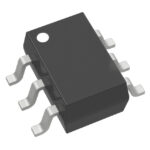 HMC434
The activity of extra discounts on wholesale prices is in full swing…
Please fill in your contact information and we will send you the latest wholesale price list.





