 ChipApex | Global Electronic Components Supplier
SEARCH
Search Product
Search Post
— IC芯片 | 连接器 | 传感器 | 被动器件 —
Search productSearch post
— IC芯片 | 连接器 | 传感器 | 被动器件 —
Consult the customer manager about the wholesale price.
consultation hotline:86-132-6715-2157
email:[email protected]
Contact the product manager for consultation. One-stop consultation is available.
Do you want a lower wholesale price? Please send us your inquiry and we will reply immediately.
The HMC492LP3ETR is a GaAs MMIC gain block manufactured by Analog Devices Inc., designed for broadband applications. It operates within a frequency range of 10 to 18 GHz, providing a typical small-signal gain of 15 dB. The device features a noise figure of approximately 3.5 dB and an output IP3 of +27 dBm at 14 GHz. Powered by a single 5V supply, it draws 60 mA of current. Packaged in a compact RoHS-compliant 10-lead LCC surface-mount package, this component offers high linearity and stable performance across its operational bandwidth.
Verify the complete part number including suffixes such as LP3ETR against official Analog Devices documentation to ensure correct packaging and tape-and-reel specifications. Confirm that the procurement channel provides valid traceability and authenticity guarantees. Check for any specific handling requirements related to electrostatic discharge protection during storage and assembly. Ensure compliance with regional import regulations regarding electronic components.
Select this component when designing circuits requiring wideband amplification between 10 and 18 GHz. Consider the single-supply architecture if power budget constraints favor simplified biasing over dual-supply configurations. Evaluate the thermal management capabilities of the PCB layout due to the power dissipation profile. Compare the noise figure and linearity metrics against system link budget requirements to ensure adequate signal integrity.
This gain block belongs to the HMC492 family of GaAs MMICs optimized for high-performance RF applications. It serves as a critical active element in microwave subsystems where size, weight, and power efficiency are paramount. The technology leverages gallium arsenide substrate properties to achieve superior high-frequency performance compared to silicon-based alternatives.
Consult official Analog Devices cross-reference guides for verified substitute part numbers. Do not assume functional equivalence with other manufacturers' devices without detailed parameter matching. Verify pinout compatibility and thermal characteristics before implementing any alternative component in existing designs.
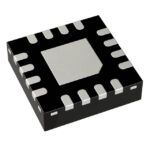 HMC492LP3ETR
The activity of extra discounts on wholesale prices is in full swing…
Please fill in your contact information and we will send you the latest wholesale price list.





