 ChipApex | Global Electronic Components Supplier
SEARCH
Search Product
Search Post
— IC芯片 | 连接器 | 传感器 | 被动器件 —
Search productSearch post
— IC芯片 | 连接器 | 传感器 | 被动器件 —
Consult the customer manager about the wholesale price.
consultation hotline:86-132-6715-2157
email:[email protected]
Contact the product manager for consultation. One-stop consultation is available.
Do you want a lower wholesale price? Please send us your inquiry and we will reply immediately.
The HMC510LP5E is a Voltage Controlled Oscillator (VCO) manufactured by Analog Devices Inc., designed for high-frequency applications. It operates within a frequency range of 8.45 GHz to 9.55 GHz, with an additional sub-harmonic output capability at 4.225 GHz to 4.775 GHz. The device features integrated Fo/2 and Div/4 outputs, simplifying system design. It requires a supply voltage between 4.75 V and 5.25 V and draws a current of 360 mA. Key performance metrics include a typical phase noise of -116 dBc/Hz and a tuning sensitivity of 20 MHz/V. The component is housed in a 32-pin QFN package with an exposed pad, suitable for surface mount technology.
Verify component authenticity through authorized Analog Devices distributors or certified partners. Confirm RoHS compliance status and moisture sensitivity level prior to assembly. Ensure handling procedures adhere to ESD protection standards due to the sensitive GaAs or similar semiconductor construction. Validate that the specific ordering suffix matches the required tape and reel configuration for automated pick-and-place processes.
Select this component when a single-chip solution for high-frequency generation with built-in frequency division is required. Consider the 32-QFN package constraints for thermal management and PCB layout. Evaluate the 5V supply requirement against available power rails. Compare phase noise specifications against system link budget requirements to ensure signal integrity is maintained throughout the operational temperature range.
This part belongs to the HMC510 series of Voltage Controlled Oscillators from Analog Devices. The series is engineered for Ku-band and Ka-band applications, offering compact form factors and integrated functionality. The LP5E designation indicates specific packaging and lead-free processing options compatible with modern surface-mount assembly lines.
The device provides a primary output frequency range of 8.45 GHz to 9.55 GHz, along with internal division outputs at 4.225 GHz to 4.775 GHz (Fo/2) and further divided signals (Div/4).
The oscillator utilizes a tuning voltage range of 2 VDC to 13 VDC to adjust the output frequency, with a typical tuning sensitivity of 20 MHz per volt.
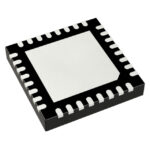 HMC510LP5E
The activity of extra discounts on wholesale prices is in full swing…
Please fill in your contact information and we will send you the latest wholesale price list.





