 ChipApex | Global Electronic Components Supplier
SEARCH
Search Product
Search Post
— IC芯片 | 连接器 | 传感器 | 被动器件 —
Search productSearch post
— IC芯片 | 连接器 | 传感器 | 被动器件 —
Consult the customer manager about the wholesale price.
consultation hotline:86-132-6715-2157
email:[email protected]
Contact the product manager for consultation. One-stop consultation is available.
Do you want a lower wholesale price? Please send us your inquiry and we will reply immediately.
The HMC898LP4E is a monolithic microwave integrated circuit (MMIC) bandpass filter designed for surface-mount technology applications. It features a user-selectable passband frequency tunable between 11.5 GHz and 21.5 GHz via an analog control voltage ranging from 0 V to 14 V. The device exhibits a typical 3 dB bandwidth of approximately 17% and a 20 dB bandwidth of roughly 35%. Key electrical specifications include a maximum insertion loss of 6 dB, a return loss of 9 dB within the 2 dB bandwidth, and an input IP3 of 29 dBm. The component operates within a temperature range of -40 °C to +85 °C and utilizes a 24-lead 4x4 mm QFN package.
Verify current availability status as the datasheet indicates this product is obsolete. Confirm compatibility with existing design requirements before procurement attempts. Check for official discontinuation notices or end-of-life announcements from Analog Devices. Ensure sourcing channels are authorized to guarantee component authenticity and traceability.
Select this component when a compact, electronically tunable bandpass solution is required for frequencies between 11.5 GHz and 21.5 GHz. Consider the 6 dB insertion loss and 29 dBm input IP3 for signal integrity analysis. Ensure the control voltage driver can supply ±1 mA source/sink current. Verify that the 4x4 mm QFN package fits the board layout constraints.
The HMC898LP4E belongs to the Hittite Microwave Corporation family of tunable filters, now part of Analog Devices. It serves as a high-frequency active filter alternative to bulky cavity-tuned units. The LP4E suffix denotes the specific lead-free, RoHS-compliant 24-lead QFN package configuration used for surface-mount assembly.
Publicly confirmed substitute part numbers are not available in the provided documentation. As the component is marked obsolete, engineering teams should evaluate newer generations of tunable filters from Analog Devices or consult technical support for direct cross-reference recommendations based on specific frequency and performance requirements.
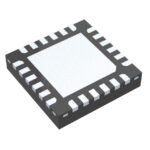 HMC898LP4E
The activity of extra discounts on wholesale prices is in full swing…
Please fill in your contact information and we will send you the latest wholesale price list.





