 ChipApex | Global Electronic Components Supplier
SEARCH
Search Product
Search Post
— IC芯片 | 连接器 | 传感器 | 被动器件 —
Search productSearch post
— IC芯片 | 连接器 | 传感器 | 被动器件 —
Consult the customer manager about the wholesale price.
consultation hotline:86-132-6715-2157
email:[email protected]
Contact the product manager for consultation. One-stop consultation is available.
Do you want a lower wholesale price? Please send us your inquiry and we will reply immediately.
The HSP43168JC-40 is a dual finite impulse response (FIR) filter manufactured by Harris Corporation, part of the HSP43168 series. It integrates two independent 8-tap FIR filters that can be configured as a single 16-tap filter. The device supports programmable decimation ratios from 1 to 16 and includes on-board storage for 32 sets of coefficients. It processes 10-bit data and coefficients, offering compute power for quadrature filtering, complex filtering, 2-D convolution, and interpolating/decimating applications. The component features a standard microprocessor interface and operates within a commercial temperature range.
Verify manufacturer origin carefully, as the HSP43168 series was originally developed by Harris Semiconductor, later acquired by Intersil, and subsequently by Renesas Electronics. Confirm the specific suffix 'JC-40' against official datasheets to ensure correct speed grade and package type. Check current availability status, as older components may be discontinued or available only through secondary markets.
Select this component when dual-channel FIR processing or high-speed decimation is required without external DSP resources. Ensure system compatibility with the 10-bit data width and standard microprocessor interface timing. Verify that the required number of coefficient sets fits within the 32-set onboard memory limit. Consider thermal requirements if operating near the upper end of the commercial temperature range.
The HSP43168 belongs to a family of dedicated analog-domain FIR filter chips designed for high-speed signal processing tasks. Originally produced by Harris Semiconductor, the product line transitioned through Intersil to Renesas Electronics. The 'JC-40' designation typically indicates a specific speed bin and commercial temperature rating within the broader HSP43168 product family.
Direct pin-compatible replacements are limited due to the specialized nature of the component. Potential alternatives include other dedicated FIR filter ICs from manufacturers like Analog Devices or Texas Instruments, though architectural differences in coefficient loading and interface protocols must be evaluated. Software-defined radio solutions using FPGAs may serve as functional substitutes for flexible designs.
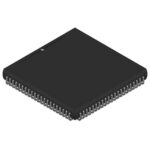 HSP43168JC-40
The activity of extra discounts on wholesale prices is in full swing…
Please fill in your contact information and we will send you the latest wholesale price list.






