 ChipApex | Global Electronic Components Supplier
SEARCH
Search Product
Search Post
— IC芯片 | 连接器 | 传感器 | 被动器件 —
Search productSearch post
— IC芯片 | 连接器 | 传感器 | 被动器件 —
Consult the customer manager about the wholesale price.
consultation hotline:86-132-6715-2157
email:[email protected]
Contact the product manager for consultation. One-stop consultation is available.
Do you want a lower wholesale price? Please send us your inquiry and we will reply immediately.
The HV56266 is a single-channel MEMS amplifier featuring external gain-set resistors. It operates with a low voltage 5V supply at VDD and a high voltage 100V-300V supply at VPP. The device supports a maximum output voltage swing of 295V and offers a wide adjustable closed-loop gain range from 30V/V to 90V/V. It maintains stability with up to 15 pF capacitive load, providing a minimum slew rate of 3 V/µs and a gain bandwidth product of 900 kHz.
Verify the specific ordering suffix to confirm package type and qualification level. The RXB suffix indicates a 32-lead VQFN package. The T suffix denotes tape and reel packaging. The E suffix specifies an extended temperature range of -40°C to +125°C. The VAO suffix confirms AEC-Q100 automotive qualification. Ensure these parameters match the design requirements before procurement.
Select this component for designs requiring a single-channel high-voltage operational amplifier with precise gain control. It is suitable for driving MEMS devices and laser beam steering systems. Consider the 32-lead VQFN package for automotive use or the 16-ball TFBGA for commercial applications. Verify that the required gain falls within the 30V/V to 90V/V range and that the load capacitance does not exceed 15 pF.
The HV56266 belongs to Microchip's family of high-voltage operational amplifiers designed for precision analog signal processing. It integrates a single amplifier channel capable of handling high voltage swings while maintaining low input bias current. The device is engineered for stability with capacitive loads, making it ideal for driving complex MEMS structures in automotive and industrial environments.
No public confirmed substitute part numbers are available in the documentation.
The HV56266 is designed to be stable with a maximum capacitive load of 15 pF.
The gain is adjusted using external feedback resistors, allowing for a closed-loop gain range between 30V/V and 90V/V.
The acceptable power-on sequence is: 1) Connect Ground, 2) Apply VDD, 3) Apply VPP, 4) Apply input signal.
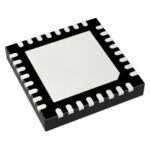 HV56266T-E/RXB-VAO
The activity of extra discounts on wholesale prices is in full swing…
Please fill in your contact information and we will send you the latest wholesale price list.






