ChipApex | Global Electronic Components Supplier
SEARCH
Search Product
Search Post
— IC芯片 | 连接器 | 传感器 | 被动器件 —
Search productSearch post
— IC芯片 | 连接器 | 传感器 | 被动器件 —
Consult the customer manager about the wholesale price.
consultation hotline:86-132-6715-2157
email:[email protected]
Contact the product manager for consultation. One-stop consultation is available.
Do you want a lower wholesale price? Please send us your inquiry and we will reply immediately.
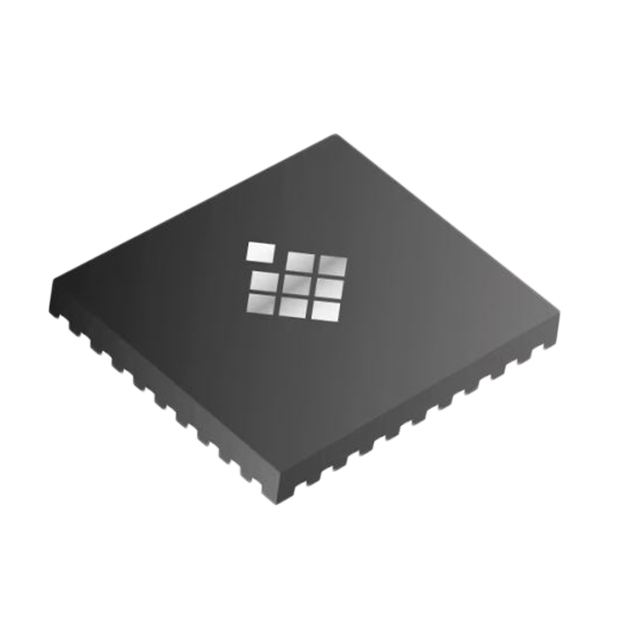
The HVC5221D is a fully integrated, programmable embedded motor controller from the TDK-Micronas HVC 5x series. It features an Arm Cortex-M3 CPU with 32 KB flash memory and 2 KB EEPROM. The device provides four independent motor outputs, each capable of delivering up to 0.5 A peak current. Designed for automotive applications, it supports stepper, BLDC, and BDC motors. Key interfaces include LIN bus connectivity and multiple analog/digital I/O pins. The component is qualified to AEC-Q100 Grade 1 standards and housed in a thermally efficient 5 x 5 mm PQFN24 package.
Verify specific ordering suffixes against official TDK-Micronas documentation to ensure correct memory configuration and package variant. Confirm that the application environment meets the AEC-Q100 Grade 1 temperature ratings. Validate pin compatibility if replacing previous generation components like the HVC 4x series. Ensure proper thermal management design for the PQFN24 package. Check for any required external programming tools or extension boards for initial development.
Select this model for applications requiring precise control of small stepper or DC motors where space and cost are critical constraints. The 0.5 A per channel limit makes it suitable for low-power actuators rather than high-torque drives. Consider the 32 KB flash capacity for complex control algorithms. Verify that the LIN interface requirements match the system architecture. Evaluate the need for additional I/O pins for sensor integration or status monitoring.
Part of the HVC 5x family, succeeding the HVC 4x series with a focus on smaller form factors and lower costs. It shares pin compatibility within the family but offers fewer outputs than the six-channel HVC 4x devices. Designed specifically for automotive thermal management and consumer appliance actuators.
Pin-compatible with other HVC 5x variants such as HVC 5222C and HVC 5481G, though output currents and configurations differ. Not directly interchangeable with HVC 4x series due to different output counts and peripheral distributions.
 HVC5221D
The activity of extra discounts on wholesale prices is in full swing…
Please fill in your contact information and we will send you the latest wholesale price list.