 ChipApex | Global Electronic Components Supplier
SEARCH
Search Product
Search Post
— IC芯片 | 连接器 | 传感器 | 被动器件 —
Search productSearch post
— IC芯片 | 连接器 | 传感器 | 被动器件 —
Consult the customer manager about the wholesale price.
consultation hotline:86-132-6715-2157
email:[email protected]
Contact the product manager for consultation. One-stop consultation is available.
Do you want a lower wholesale price? Please send us your inquiry and we will reply immediately.
The ICL5101XUMA1 is a high-voltage resonant controller IC designed for LED lighting applications. It operates as an AC-DC offline switcher with three independent outputs, supporting adjustable voltage regulation. The device features a boost topology and functions within a switching frequency range of 20 kHz to 120 kHz. It accepts an input voltage between 10.6 V and 17.5 V, delivering an output current of up to 700 mA. The component is housed in a 16-SOIC package (PG-DSO-16-23) and supports surface mount installation. It ensures reliable operation across a junction temperature range of -40°C to +125°C.
Verify the lifecycle status before procurement, as this component is marked as Not Recommended for New Designs (NRND). Confirm that existing inventory meets project requirements, as future manufacturing availability may be limited. Ensure compatibility with current design specifications since replacement parts might require schematic adjustments. Check datasheet revisions for any parameter updates prior to finalizing orders.
Select this component for designs requiring a three-output resonant controller with integrated protection features. Consider the NRND status when planning long-term production runs. Evaluate the 16-SOIC package constraints against PCB layout limitations. Verify that the 10.6 V to 17.5 V input range aligns with the system's supply architecture. Assess whether the 700 mA output current suffices for the target LED load requirements.
This part belongs to Infineon's ICL series of LED lighting drivers. It serves as a specialized controller for resonant topologies, distinct from standard linear or PWM drivers. The XUMA1 suffix indicates tape-and-reel packaging. It is categorized under PMIC LED drivers, targeting commercial and industrial illumination sectors where multi-channel control is necessary.
Publicly confirmed substitute part numbers are not available in the provided documentation. Due to the NRND status, alternative components should be evaluated based on pin compatibility and electrical specifications rather than direct cross-reference lists.
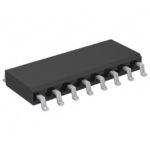 ICL5101XUMA1
The activity of extra discounts on wholesale prices is in full swing…
Please fill in your contact information and we will send you the latest wholesale price list.





