 ChipApex | Global Electronic Components Supplier
SEARCH
Search Product
Search Post
— IC芯片 | 连接器 | 传感器 | 被动器件 —
Search productSearch post
— IC芯片 | 连接器 | 传感器 | 被动器件 —
Consult the customer manager about the wholesale price.
consultation hotline:86-132-6715-2157
email:[email protected]
Contact the product manager for consultation. One-stop consultation is available.
Do you want a lower wholesale price? Please send us your inquiry and we will reply immediately.
The ICS9148F-02 is a clock synthesizer integrated circuit designed for Pentium and Pentium Pro CPU-based desktop and notebook systems. It generates system clocks for the CPU, IOAPIC, SDRAM, PCI, USB, and Super I/O devices using an external 14.318 MHz crystal or clock input. The device supports single or dual processor configurations and provides four CPU, seven PCI, and eight SDRAM clocks. It operates within a supply voltage range of 3.135V to 3.465V and functions at temperatures between 0°C and 70°C. The chip meets Pentium power-up stabilization requirements, ensuring CPU and PCI clocks are stable within 2ms after power-up.
Verify the package type matches the required 48-pin SSOP form factor. Confirm that the operating temperature range of 0°C to 70°C aligns with the target system environment. Ensure the design accommodates the specific 3.135V to 3.465V supply voltage constraints and utilizes an external 14.318 MHz reference crystal.
Select this component when designing for legacy Intel Pentium or Pentium Pro architectures. It is suitable for applications requiring a single-chip solution for generating CPU, PCI, and SDRAM clocks. Consider the I2C interface complexity if dynamic clock reconfiguration is needed during runtime. Verify that the board layout can support the necessary ground planes and trace widths as specified in the general layout precautions.
The ICS9148F-02 belongs to the ICS9148 series of clock synthesizers originally manufactured by Integrated Circuit Systems (ICS), which was later acquired by Renesas Electronics Corporation. This specific variant is tailored for Intel x86 processors from the mid-to-late 1990s era. It serves as a critical timing component in legacy PC motherboards, replacing discrete oscillator solutions with a programmable PLL-based generator.
Public confirmed substitute part numbers are not available in the provided documentation. Due to the legacy nature of the Pentium/Pro architecture support, direct pin-compatible replacements may be limited. Designers should verify compatibility with existing BIOS/firmware configurations if substituting with other ICS9148 variants.
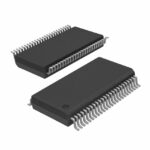 ICS9148F-02
The activity of extra discounts on wholesale prices is in full swing…
Please fill in your contact information and we will send you the latest wholesale price list.





