 ChipApex | Global Electronic Components Supplier
SEARCH
Search Product
Search Post
— IC芯片 | 连接器 | 传感器 | 被动器件 —
Search productSearch post
— IC芯片 | 连接器 | 传感器 | 被动器件 —
Consult the customer manager about the wholesale price.
consultation hotline:86-132-6715-2157
email:[email protected]
Contact the product manager for consultation. One-stop consultation is available.
Do you want a lower wholesale price? Please send us your inquiry and we will reply immediately.
The IL4118-X009T is a single-channel phototriac output optocoupler manufactured by Vishay Semiconductor Opto Division. It features an integrated zero-crossing detection circuit for precise AC load control. The device utilizes a PDIP-6 Gull Wing surface-mount package. Key electrical parameters include a maximum forward current of 60 mA and a forward voltage of 1.3 V. It offers high isolation with an insulation voltage of 5300 Vrms. The output triac supports a peak off-state voltage (VDRM) of 850 V and a maximum continuous output current of 300 mA. Power dissipation is rated at 500 mW. The component operates within a temperature range of -55°C to +100°C.
Verify the specific suffix X009T corresponds to the tape and reel packaging configuration required for your assembly process. Confirm that the PDIP-6 Gull Wing footprint matches your PCB design guidelines. Ensure the 5300 Vrms isolation rating meets the safety standards applicable to your target market. Cross-reference the manufacturer part number with official Vishay documentation to confirm current production status and RoHS compliance details before finalizing procurement.
Select this component when zero-crossing switching is required to reduce noise in AC power applications. The 850 VDRM rating suits standard mains voltage applications. Consider the 300 mA continuous output current limit for load sizing. The surface-mount package facilitates automated assembly. Compare against other Vishay triac outputs if higher current or different isolation voltages are needed.
This device belongs to the Vishay IL series of phototriac output optocouplers. These components are engineered for industrial and consumer AC power control applications. The series emphasizes reliability and low electromagnetic interference through integrated zero-crossing technology. The IL4118 variant specifically targets general-purpose AC switching tasks requiring galvanic isolation.
The zero-crossing circuit detects when the AC line voltage crosses zero and delays triggering until that point. This minimizes inrush currents and reduces electromagnetic interference generated during switching.
The phototriac output can withstand a maximum repetitive peak off-state voltage (VDRM) of 850 V.
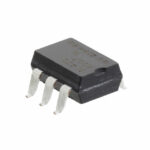 IL4118-X009T
The activity of extra discounts on wholesale prices is in full swing…
Please fill in your contact information and we will send you the latest wholesale price list.






