 ChipApex | Global Electronic Components Supplier
SEARCH
Search Product
Search Post
— IC芯片 | 连接器 | 传感器 | 被动器件 —
Search productSearch post
— IC芯片 | 连接器 | 传感器 | 被动器件 —
Consult the customer manager about the wholesale price.
consultation hotline:86-132-6715-2157
email:[email protected]
Contact the product manager for consultation. One-stop consultation is available.
Do you want a lower wholesale price? Please send us your inquiry and we will reply immediately.
The IL4218-X019T is a phototriac output optocoupler manufactured by Vishay Semiconductor Opto Division. It features a gallium arsenide infrared emitting diode coupled to a triac output, providing electrical isolation for control circuits. The device offers an isolation voltage of 5300 Vrms and operates within a temperature range of -40°C to +100°C. Packaged in a surface-mount SOIC-6 extension, it supports low input current operation suitable for industrial applications requiring robust signal transmission across isolated boundaries.
Verify the specific suffix X019T against the official Vishay datasheet to confirm packaging and reel specifications. Ensure compatibility with RoHS3 directives if required by your manufacturing standards. Cross-reference the component marking with the manufacturer's latest documentation to avoid counterfeit parts, as visual inspection alone may not distinguish genuine units from replicas.
Select this component when high isolation voltage and low input current are critical for the application. Consider the SOIC-6 extension package dimensions for PCB layout constraints. Evaluate the peak forward current capabilities against the driving source limitations. Verify that the output triac holding current meets the minimum load requirements of the controlled AC circuit to ensure reliable switching performance.
This part belongs to Vishay's family of phototriac output optocouplers designed for general-purpose isolation. It complements other devices in the series offering different output configurations or isolation ratings. The product line targets industrial and consumer electronics markets where reliable AC switching and galvanic isolation are necessary for system safety and noise immunity.
Check Vishay's official substitution guide for direct replacements. Verify pinout compatibility and isolation voltage ratings before substituting with similar phototriac optocouplers from other manufacturers. Ensure thermal characteristics and package dimensions match the existing design constraints.
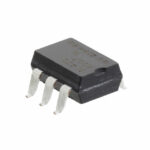 IL4218-X019T
The activity of extra discounts on wholesale prices is in full swing…
Please fill in your contact information and we will send you the latest wholesale price list.






