ChipApex | Global Electronic Components Supplier

SEARCH
Search Product
Search Post
— IC芯片 | 连接器 | 传感器 | 被动器件 —
Search productSearch post
— IC芯片 | 连接器 | 传感器 | 被动器件 —
Consult the customer manager about the wholesale price.
consultation hotline:86-132-6715-2157
email:[email protected]
Contact the product manager for consultation. One-stop consultation is available.
Do you want a lower wholesale price? Please send us your inquiry and we will reply immediately.
The INA111BUG4 is a high-speed, FET-input instrumentation amplifier manufactured by Texas Instruments. It utilizes a current-feedback topology to deliver excellent performance in signal conditioning applications. The device features a gain range of 1 V/V to 1000 V/V and offers a typical Common-Mode Rejection Ratio (CMRR) of 110 dB. Key electrical specifications include a slew rate of 17 V/µs and an input voltage noise density of 10 nV/√Hz. It operates with a dual supply voltage of 15 V and is housed in a 16-pin SOIC package.
Verify the specific suffix 'G4' indicates lead-free and RoHS compliance status as per manufacturer documentation. Confirm the package type matches the required 16-SOIC footprint for PCB layout compatibility. Check for obsolescence notices, as some variants may be discontinued or replaced by newer generations within the same family. Ensure the operating temperature range meets the environmental requirements of the final assembly.
Select this component when high-speed precision amplification is required alongside low noise characteristics. The FET input makes it suitable for high-impedance sources where bias current must be minimized. Consider the 110 dB CMRR for environments with significant common-mode noise. Evaluate the 17 V/µs slew rate against the maximum signal frequency to ensure minimal distortion in dynamic applications.
The INA111 series belongs to Texas Instruments' portfolio of precision instrumentation amplifiers designed for demanding measurement applications. This specific variant integrates the benefits of FET inputs with a robust current-feedback architecture. It serves as a critical interface between analog sensors and digital conversion stages, ensuring signal integrity across various industrial and scientific domains.
Check for direct pin-compatible replacements within the INA111 family that may offer updated manufacturing statuses. Verify if newer iterations provide improved CMRR or lower noise figures while maintaining the same package outline. Ensure any substitute maintains the FET-input characteristic if low bias current is critical to the circuit design.
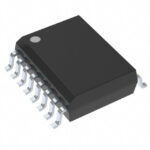 INA111BUG4

The activity of extra discounts on wholesale prices is in full swing…
Please fill in your contact information and we will send you the latest wholesale price list.