ChipApex | Global Electronic Components Supplier

SEARCH
Search Product
Search Post
— IC芯片 | 连接器 | 传感器 | 被动器件 —
Search productSearch post
— IC芯片 | 连接器 | 传感器 | 被动器件 —
Consult the customer manager about the wholesale price.
consultation hotline:86-132-6715-2157
email:[email protected]
Contact the product manager for consultation. One-stop consultation is available.
Do you want a lower wholesale price? Please send us your inquiry and we will reply immediately.
The INA117SM is a precision unity-gain difference amplifier from Texas Instruments, designed for applications requiring very high common-mode input voltage ranges. This single-channel monolithic IC operates with a gain bandwidth product of 200 kHz and a slew rate of 2.6 V/µs. It features a common-mode rejection ratio (CMRR) of 70 dB and an input offset voltage of 600 µV. The device supports a maximum supply voltage of 36 V and draws 1.5 mA of operating current. It provides 20 mA output current per channel and functions within a temperature range of -40°C to +85°C. The component is housed in a TO-99-8 package.
Verify the specific package variant, as the INA117 series includes both SOIC and TO-99 configurations. Confirm lifecycle status, as some variants are scheduled for obsolescence. Ensure compatibility with existing PCB footprints, particularly regarding the TO-99-8 metal can package dimensions. Check for moisture sensitivity levels if storage conditions require baking prior to assembly. Validate that the selected unit meets the required common-mode voltage specifications for the target application.
Select this component when high common-mode voltage rejection is critical alongside precision unity-gain amplification. The TO-99-8 package offers robust protection suitable for harsh environments. Consider the 200 kHz bandwidth limit for high-speed applications. Evaluate the 600 µV input offset voltage against system accuracy requirements. Ensure the supply voltage range accommodates the ±15V requirement for optimal common-mode performance.
The INA117 series represents a family of precision difference amplifiers engineered for high common-mode voltage applications. While the INA117KU utilizes an SOIC-8 surface-mount package, the INA117SM specifically employs a TO-99-8 hermetic metal can package. This distinction affects mounting methods and environmental resilience. Both variants share core electrical characteristics but differ in physical form factor and potential thermal management requirements.
Check for direct pin-compatible alternatives within the same family. Verify if newer generations offer improved CMRR or lower offset voltages. Ensure any substitute maintains the ±500V input protection capability. Confirm package compatibility if replacing the TO-99-8 variant with a different form factor.
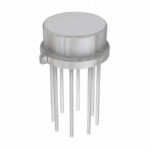 INA117SM

The activity of extra discounts on wholesale prices is in full swing…
Please fill in your contact information and we will send you the latest wholesale price list.