ChipApex | Global Electronic Components Supplier

SEARCH
Search Product
Search Post
— IC芯片 | 连接器 | 传感器 | 被动器件 —
Search productSearch post
— IC芯片 | 连接器 | 传感器 | 被动器件 —
Consult the customer manager about the wholesale price.
consultation hotline:86-132-6715-2157
email:[email protected]
Contact the product manager for consultation. One-stop consultation is available.
Do you want a lower wholesale price? Please send us your inquiry and we will reply immediately.
The INA128PA is a precision, low-power instrumentation amplifier manufactured by Texas Instruments. It features a single circuit configuration housed in an 8-pin PDIP package. Key electrical specifications include a supply voltage range of 4.5V to 36V, a gain bandwidth product of 1.3 MHz, and a slew rate of 4 V/µs. The device offers a typical input offset voltage of 50 µV and a maximum input bias current of 2 nA. It operates within a temperature range of -40°C to +85°C and consumes 700 µA of supply current.
Verify the specific suffix 'P' indicates the through-hole PDIP package variant distinct from surface-mount versions. Confirm the operating temperature grade matches application requirements. Ensure compatibility with existing PCB footprints designed for dual-in-line packages. Check for lead-free compliance status if required by regional regulations.
Select this component when through-hole mounting is preferred over surface mount alternatives like the INA128U. Consider the 1.3 MHz bandwidth and 4 V/µs slew rate for moderate-speed applications. Evaluate the 700 µA supply current against power constraints. Compare input offset voltage specifications against other precision amplifiers if higher accuracy is needed.
The INA128 series is a well-established family of instrumentation amplifiers known for combining high precision with low power consumption. The PA variant specifically denotes the plastic dual in-line package version, offering ease of prototyping and manual assembly compared to smaller surface-mount packages. It remains a standard choice for general-purpose precision amplification tasks.
Official substitutes within the same family include the INA128UA for surface-mount applications. Verify pinout compatibility and package dimensions before substitution. Ensure thermal characteristics and operating temperature ranges align with the original design intent.
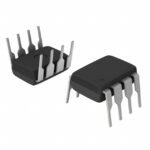 INA128PA

The activity of extra discounts on wholesale prices is in full swing…
Please fill in your contact information and we will send you the latest wholesale price list.