ChipApex | Global Electronic Components Supplier

SEARCH
Search Product
Search Post
— IC芯片 | 连接器 | 传感器 | 被动器件 —
Search productSearch post
— IC芯片 | 连接器 | 传感器 | 被动器件 —
Consult the customer manager about the wholesale price.
consultation hotline:86-132-6715-2157
email:[email protected]
Contact the product manager for consultation. One-stop consultation is available.
Do you want a lower wholesale price? Please send us your inquiry and we will reply immediately.
The INA159AIDGKTG4 is a high-speed precision differential amplifier manufactured by Texas Instruments. It features a fixed gain of 0.2 V/V and provides level translation capabilities. The device operates on a single supply voltage ranging from 1.8 V to 5.5 V with a quiescent current of 1.1 mA. Key electrical specifications include a gain-bandwidth product of 1.5 MHz, a slew rate of 15 V/us, and an input offset voltage of 100 uV. It offers a common-mode rejection ratio of 80 dB and a power supply rejection ratio of approximately 94 dB. The output can source up to 60 mA per channel. It is housed in an 8-pin VSSOP package and supports operating temperatures from -40°C to +125°C.
Verify the complete part number including the G4 suffix to ensure compliance with RoHS standards and lead-free manufacturing requirements. Confirm the VSSOP-8 package variant matches the design footprint. Check datasheet revisions for any updates to electrical characteristics or recommended operating conditions before finalizing procurement specifications.
Select this component when a fixed attenuation gain of 0.2 V/V is required alongside level translation. It is suitable for applications needing high slew rates and moderate bandwidth under low-voltage single-supply conditions. Consider the 60 mA output drive capability for driving low-impedance loads directly without additional buffering stages.
This device belongs to the INA159 series of high-speed precision differential amplifiers. It is designed to simplify circuit design by integrating gain and level translation into a single monolithic component. The family targets applications where space constraints and power efficiency are critical, offering a compact solution compared to discrete resistor networks.
Check for direct pin-compatible alternatives within the INA159 family that may offer different gain options or improved CMRR. Verify if upgraded versions with enhanced thermal performance or extended temperature ranges are available for specific environmental requirements.
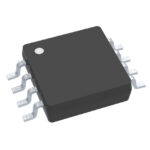 INA159AIDGKTG4

The activity of extra discounts on wholesale prices is in full swing…
Please fill in your contact information and we will send you the latest wholesale price list.