ChipApex | Global Electronic Components Supplier

SEARCH
Search Product
Search Post
— IC芯片 | 连接器 | 传感器 | 被动器件 —
Search productSearch post
— IC芯片 | 连接器 | 传感器 | 被动器件 —
Consult the customer manager about the wholesale price.
consultation hotline:86-132-6715-2157
email:[email protected]
Contact the product manager for consultation. One-stop consultation is available.
Do you want a lower wholesale price? Please send us your inquiry and we will reply immediately.
The INA181A2QDBVRQ1 is a unidirectional current sense amplifier from Texas Instruments, designed for automotive applications with AEC-Q100 qualification. It operates on a single supply voltage ranging from 2.7 V to 5.5 V and consumes 195 µA of supply current. The device features a fixed gain of 50 V/V, an input offset voltage of 100 µV, and an input bias current of 75 µA. It provides a slew rate of 2 V/µs and a gain-bandwidth product of 210 kHz. The output is rail-to-rail, and it functions within a temperature range of -40°C to 125°C in a SOT-23-6 package.
Verify the specific suffix QDBVRQ1 to confirm automotive grade and SOT-23-6 packaging. Ensure compatibility with your system's voltage levels and thermal requirements. Check for recent production change notices regarding marking or assembly materials. Confirm RoHS compliance status if required by your manufacturing process. Validate that the fixed gain of 50 V/V meets your signal conditioning needs without external components.
Select this component when a fixed gain of 50 V/V is required for high-side sensing in automotive systems. It is suitable for applications needing low quiescent current and rail-to-rail output. Consider alternatives if bidirectional sensing or higher common-mode voltages are necessary. Verify that the 210 kHz bandwidth is sufficient for your switching frequencies. Ensure the SOT-23-6 package fits your PCB layout constraints.
This part belongs to the INA181-Q1 family of current sense amplifiers. It shares architectural similarities with other members like the INA180-Q1 but differs in gain configuration and package options. The Q1 designation indicates automotive qualification, distinguishing it from commercial variants. It is often used alongside other TI automotive analog devices for comprehensive power management solutions.
Publicly confirmed substitute part numbers are not available in the provided documentation. Verify pinout and electrical specifications carefully before considering any non-official alternatives. Cross-referencing with the official datasheet is essential to ensure functional equivalence.
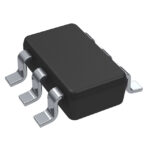 INA181A2QDBVRQ1

The activity of extra discounts on wholesale prices is in full swing…
Please fill in your contact information and we will send you the latest wholesale price list.