ChipApex | Global Electronic Components Supplier

SEARCH
Search Product
Search Post
— IC芯片 | 连接器 | 传感器 | 被动器件 —
Search productSearch post
— IC芯片 | 连接器 | 传感器 | 被动器件 —
Consult the customer manager about the wholesale price.
consultation hotline:86-132-6715-2157
email:[email protected]
Contact the product manager for consultation. One-stop consultation is available.
Do you want a lower wholesale price? Please send us your inquiry and we will reply immediately.
The INA183A3IDBVR is a high-precision current sense amplifier from Texas Instruments, designed for bidirectional current sensing applications. It operates within a supply voltage range of 2.7 V to 26 V and supports common-mode voltages up to 26 V. The device features a fixed gain of 50 V/V and offers a typical input offset voltage of 25 µV with a maximum of 150 µV at room temperature. It provides a common-mode rejection ratio (CMRR) of 80 dB minimum and includes an internal reference pin for output adjustment. Packaged in a compact SOT-23-5 surface-mount case, it is optimized for space-constrained designs requiring accurate low-side or high-side current monitoring.
Verify the specific suffix 'A3' indicates the fixed gain of 50 V/V and 'IDBVR' denotes the SOT-23-5 package with tape-and-reel packaging. Confirm that the operating temperature range meets your environmental requirements, as industrial grades typically span -40°C to +125°C. Ensure compatibility with your system's common-mode voltage levels before integration.
Select this component when a fixed gain of 50 V/V is required for bidirectional sensing. It is suitable for applications where board space is limited due to its small SOT-23-5 footprint. Consider the input offset voltage specifications if measuring very small currents, as the 25 µV typical value ensures accuracy in low-signal scenarios without external trimming.
The INA183 belongs to Texas Instruments' family of high-precision current sense amplifiers. Unlike general-purpose op amps, these devices are optimized for differential measurements across shunt resistors. The A3 variant specifically sets the internal gain, simplifying design calculations compared to adjustable-gain counterparts. This series is widely used in modern power management architectures requiring reliable current feedback.
Check datasheets for compatible parts such as the INA180 or INA181 series, ensuring gain and package compatibility. Verify that substitute components support the same bidirectional operation and common-mode voltage range. Confirm pinout compatibility to avoid PCB redesigns during replacement.
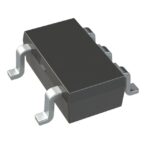 INA183A3IDBVR

The activity of extra discounts on wholesale prices is in full swing…
Please fill in your contact information and we will send you the latest wholesale price list.