ChipApex | Global Electronic Components Supplier

SEARCH
Search Product
Search Post
— IC芯片 | 连接器 | 传感器 | 被动器件 —
Search productSearch post
— IC芯片 | 连接器 | 传感器 | 被动器件 —
Consult the customer manager about the wholesale price.
consultation hotline:86-132-6715-2157
email:[email protected]
Contact the product manager for consultation. One-stop consultation is available.
Do you want a lower wholesale price? Please send us your inquiry and we will reply immediately.
The INA191A4IYFDR is a low-power, voltage-output current shunt monitor manufactured by Texas Instruments. It operates on a single supply voltage ranging from 1.7V to 5.5V and features a fixed gain of 200 V/V. The device supports bidirectional current sensing with a common-mode voltage range extending from –0.2V to +40V, independent of the supply voltage. Key electrical specifications include a maximum gain error of 0.25%, an input bias current of 100pA typical, and a quiescent current of 65µA maximum when enabled. It is housed in a DSBGA-6 package and rated for operation between -40°C and +125°C.
Verify the specific suffix 'IYFDR' corresponds to the intended temperature grade, package type, and tape-and-reel quantity. Confirm that the fixed 200 V/V gain aligns with the system's required output voltage swing relative to the reference pin. Ensure the DSBGA-6 footprint matches the PCB layout guidelines provided in the official datasheet to maintain thermal and electrical integrity.
Select this component when high precision is required at low power budgets. The zero-drift design is critical for applications demanding accuracy over wide temperature ranges without frequent calibration. Compare against standard amplifiers if lower cost is prioritized over ultra-low offset drift. Ensure the 200 V/V gain does not saturate the output within the expected signal range and supply voltage constraints.
This part belongs to the INA191 family of current shunt monitors designed for battery management and industrial process controls. The 'A4' designation indicates the specific 200 V/V gain variant within the series. The family shares core architectural benefits such as rail-to-rail output and wide common-mode rejection, tailored for different sensitivity requirements in compact electronic designs.
Check for direct functional equivalents within the INA191 series offering different gain options (e.g., A1, A2, A3) if signal scaling permits. Verify compatibility with alternative packages like WSON if board space constraints differ. Ensure substitute devices maintain similar input bias current and offset voltage characteristics to preserve measurement accuracy.
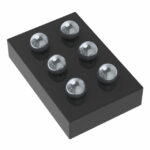 INA191A4IYFDR

The activity of extra discounts on wholesale prices is in full swing…
Please fill in your contact information and we will send you the latest wholesale price list.