ChipApex | Global Electronic Components Supplier
SEARCH
Search Product
Search Post
— IC芯片 | 连接器 | 传感器 | 被动器件 —
Search productSearch post
— IC芯片 | 连接器 | 传感器 | 被动器件 —
Consult the customer manager about the wholesale price.
consultation hotline:86-132-6715-2157
email:[email protected]
Contact the product manager for consultation. One-stop consultation is available.
Do you want a lower wholesale price? Please send us your inquiry and we will reply immediately.
The INA213AIDCKR is a single-channel, bidirectional current-shunt monitor from Texas Instruments' Zero-Drift series. It features a fixed gain of 50 V/V and operates within a supply voltage range of 2.7 V to 26 V. The device draws a typical supply current of 65 µA and supports an input common-mode voltage up to 26 V. It offers high accuracy with a maximum offset voltage of 5 µV and a minimum common-mode rejection ratio (CMRR) of 140 dB. The component functions across an extended temperature range of -40°C to +125°C and is housed in a compact SC-70-6 surface-mount package.
Verify the specific suffix 'CKR' corresponds to the SC-70-6 tape-and-reel packaging configuration as defined by Texas Instruments. Confirm that the 'A' grade designation meets the required offset voltage specifications for your application. Ensure compatibility with the target PCB footprint for the six-lead SC-70 package. Cross-reference the latest datasheet revision to confirm pinout and electrical characteristics remain unchanged.
Select this component when high precision is required without external calibration due to its zero-drift technology. It is suitable for applications requiring bidirectional current sensing with a fixed gain of 50 V/V. Consider the 26 V common-mode voltage limit and 2.7 V minimum supply voltage when designing the power rail. The low 65 µA quiescent current makes it ideal for energy-constrained designs compared to higher-current alternatives.
This part belongs to the INA21x family of voltage-output, bidirectional, zero-drift current-shunt monitors. The family includes variants like INA212, INA214, and INA215, which differ primarily in gain settings and bandwidth. The INA213 specifically provides a fixed 50 V/V gain, balancing resolution and dynamic range for general-purpose current sensing tasks in compact form factors.
Direct functional substitutes within the same package include INA212AIDCKR (Gain 100 V/V) and INA214AIDCKR (Gain 25 V/V). Verify that the gain difference does not saturate the output or reduce resolution in your specific circuit design. Other family members may require schematic adjustments due to varying gain configurations.
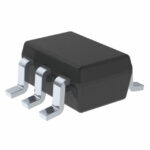 INA213AIDCKR
The activity of extra discounts on wholesale prices is in full swing…
Please fill in your contact information and we will send you the latest wholesale price list.