ChipApex | Global Electronic Components Supplier
SEARCH
Search Product
Search Post
— IC芯片 | 连接器 | 传感器 | 被动器件 —
Search productSearch post
— IC芯片 | 连接器 | 传感器 | 被动器件 —
Consult the customer manager about the wholesale price.
consultation hotline:86-132-6715-2157
email:[email protected]
Contact the product manager for consultation. One-stop consultation is available.
Do you want a lower wholesale price? Please send us your inquiry and we will reply immediately.
The INA213AQDCKRQ1 is a zero-drift current sense amplifier from Texas Instruments, designed for high-precision applications in automotive environments. It features a single-channel output with a unidirectional configuration and operates within a supply voltage range of 2.7 V to 26 V. Key electrical specifications include an input offset voltage of 5 µV, an input bias current of 28 µA, and a gain bandwidth product of 14 kHz. The device achieves a slew rate of 0.4 V/µs and draws a supply current of 65 µA. It is qualified under AEC-Q100 standards and supports operating temperatures from -40°C to 125°C.
Verify the specific suffix 'B' or 'AQ' against your bill of materials, as these indicate different initial offset voltage grades within the same package. Confirm that the SC-70-6 package meets your PCB footprint requirements. Ensure the AEC-Q100 qualification aligns with your OEM's component approval list. Check the latest datasheet revision for any updates to mechanical dimensions or testing conditions.
Select this component when low offset voltage drift is critical for measurement accuracy over wide temperature ranges. The unidirectional nature limits use cases compared to bidirectional models like the INA212. Consider the 14 kHz bandwidth for applications requiring moderate response speeds. The SC-70-6 package offers space savings but requires careful thermal management if power dissipation is significant.
This part belongs to the INA21xQ1 family of automotive current sense amplifiers. It shares the zero-drift technology and compact packaging with other members like the INA212 and INA214. The 'Q1' suffix denotes automotive qualification, while 'AQ' specifies the offset voltage grade. It complements higher-bandwidth or bidirectional variants in TI's portfolio for diverse automotive sensing needs.
The INA213BQDCKRQ1 is a confirmed substitute with identical functionality but potentially different initial offset voltage grading. Verify pin compatibility and ensure the alternative meets the same AEC-Q100 reliability standards. No functional changes are expected between these variants.
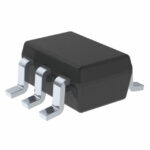 INA213AQDCKRQ1
The activity of extra discounts on wholesale prices is in full swing…
Please fill in your contact information and we will send you the latest wholesale price list.