 ChipApex | Global Electronic Components Supplier
SEARCH
Search Product
Search Post
— IC芯片 | 连接器 | 传感器 | 被动器件 —
Search productSearch post
— IC芯片 | 连接器 | 传感器 | 被动器件 —
Consult the customer manager about the wholesale price.
consultation hotline:86-132-6715-2157
email:[email protected]
Contact the product manager for consultation. One-stop consultation is available.
Do you want a lower wholesale price? Please send us your inquiry and we will reply immediately.
The INA2141UG4 is a dual low-power instrumentation amplifier manufactured by Texas Instruments. It features a 200 kHz bandwidth and a 4 V/us slew rate. The device offers a common-mode rejection ratio of 117 dB, an input bias current of 5 nA, and an input offset voltage of 50 uV. Operating on a supply voltage range of 4.5 V to 36 V, it consumes 750 uA of quiescent current. Available in a 16-pin SOIC package, it supports gains of 10 V/V and 100 V/V with a gain error of 0.002%.
Verify the specific suffix 'G4' indicates lead-free packaging compliance when sourcing. Confirm the package type matches the required PCB footprint. Ensure the operating temperature range aligns with the intended environmental conditions. Check for moisture sensitivity levels if reflow soldering is planned. Validate that the gain configuration meets the system requirements before finalizing the order.
Select this component for applications demanding high common-mode rejection and low power consumption. Consider the 200 kHz bandwidth limit for signal frequency requirements. Evaluate the 16-pin SOIC package size against available board space. Compare input offset voltage specifications against other precision amplifier options. Assess the supply voltage range compatibility with existing power rails.
This part belongs to the INA2141 series of instrumentation amplifiers from Texas Instruments. It shares architectural similarities with other devices in the family but differs in specific electrical parameters and packaging options. The series is designed for general-purpose precision amplification tasks across various industrial and commercial sectors.
INA2141UAE4: Dual, Low Power, G = 10, 100 Instrumentation Amplifier 16-SOIC
The maximum supply voltage is 36 V.
No, the datasheet does not specify rail-to-rail output capability.
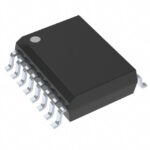 INA2141UG4
The activity of extra discounts on wholesale prices is in full swing…
Please fill in your contact information and we will send you the latest wholesale price list.





