 ChipApex | Global Electronic Components Supplier
SEARCH
Search Product
Search Post
— IC芯片 | 连接器 | 传感器 | 被动器件 —
Search productSearch post
— IC芯片 | 连接器 | 传感器 | 被动器件 —
Consult the customer manager about the wholesale price.
consultation hotline:86-132-6715-2157
email:[email protected]
Contact the product manager for consultation. One-stop consultation is available.
Do you want a lower wholesale price? Please send us your inquiry and we will reply immediately.
The INA215CIRSWT is a bi-directional, zero-drift current shunt monitor manufactured by Texas Instruments. It operates within a supply voltage range of 2.7 V to 26 V and supports common-mode voltages from -0.3 V to 26 V. The device features a fixed gain of 75 V/V, a maximum offset voltage of ±35 μV, and a gain error of 0.02%. It draws 100 μA of operating current and offers a common-mode rejection ratio of 140 dB. The component functions across an extended temperature range of -40°C to +125°C and is housed in a 10-pin UQFN package.
Verify the specific suffix 'C' indicates the commercial temperature grade variant when sourcing. Confirm the 'SWT' suffix corresponds to the 10-pin UQFN package type and reel packaging specifications. Ensure compatibility with existing PCB footprints designed for this specific package outline. Cross-reference the manufacturer datasheet for any recent lifecycle or obsolescence notices.
Select this component when precise current sensing is required in environments with high common-mode voltages. The zero-drift technology minimizes calibration needs compared to standard amplifiers. Consider the 75 V/V gain factor to ensure the output signal remains within the ADC input range of the microcontroller. Evaluate the 100 μA quiescent current against system power budget constraints.
This part belongs to the INA215 series of current sense amplifiers, which are designed for high-accuracy applications. Unlike the INA210 or INA214, the INA215 supports both high-side and low-side measurements. The CIRSWT designation identifies it as a specific package and temperature grade variant within the broader family of Texas Instruments current monitoring solutions.
Direct functional substitutes include the INA215CIRSWTR for tape-and-reel packaging variations. For pin-compatible alternatives with different gains, consider the INA219 series, though architectural differences exist. Verify that any replacement maintains the 26 V common-mode voltage rating and similar offset characteristics.
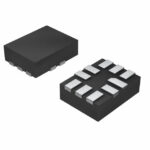 INA215CIRSWT
The activity of extra discounts on wholesale prices is in full swing…
Please fill in your contact information and we will send you the latest wholesale price list.






