ChipApex | Global Electronic Components Supplier
SEARCH
Search Product
Search Post
— IC芯片 | 连接器 | 传感器 | 被动器件 —
Search productSearch post
— IC芯片 | 连接器 | 传感器 | 被动器件 —
Consult the customer manager about the wholesale price.
consultation hotline:86-132-6715-2157
email:[email protected]
Contact the product manager for consultation. One-stop consultation is available.
Do you want a lower wholesale price? Please send us your inquiry and we will reply immediately.
The INA2180A4QDGKRQ1 is a dual-channel current-sense amplifier certified to AEC-Q100 standards for automotive reliability. It features a fixed gain of 200 V/V and operates within a supply voltage range of 2.7V to 5.5V. The device supports a wide common-mode voltage range from -0.2V to +26V, enabling high-side or low-side sensing. Key electrical specifications include a bandwidth of 105kHz, a slew rate of 2V/µs, and a maximum quiescent current of 355µA per channel. Input characteristics feature an offset voltage of up to 100µV and a CMRR of 100dB. It is housed in an 8-VSSOP package and functions across a temperature range of -40°C to +125°C.
Verify the specific suffix 'QDGKRQ1' to confirm AEC-Q100 automotive qualification and tape-and-reel packaging format. Ensure the design accounts for the 8-VSSOP thermal requirements and the specified 2.7V to 5.5V supply constraints. Cross-reference the manufacturer's latest datasheet for any pinout revisions or recommended operating conditions prior to finalizing the bill of materials.
Select this component when dual-channel precision sensing is required within automotive applications. The fixed 200 V/V gain simplifies resistor selection while maintaining accuracy. Consider the 105kHz bandwidth for applications requiring moderate response speeds. The wide common-mode range allows flexibility in shunt placement relative to the system ground potential.
This part belongs to the INA2180 family of current-sense amplifiers designed for cost-optimized industrial and automotive solutions. The 'Q' designation indicates automotive qualification, while 'A4' specifies the 200 V/V gain variant. It complements single-channel counterparts by offering integrated dual-channel functionality in a compact footprint.
Direct substitutes include other AEC-Q100 qualified dual-channel current sense amplifiers with comparable gain and voltage ranges. Verify pin compatibility and thermal performance before swapping. Generic operational amplifiers are not suitable replacements due to the specialized internal circuitry for shunt monitoring.
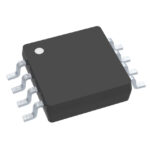 INA2180A4QDGKRQ1
The activity of extra discounts on wholesale prices is in full swing…
Please fill in your contact information and we will send you the latest wholesale price list.