 ChipApex | Global Electronic Components Supplier
SEARCH
Search Product
Search Post
— IC芯片 | 连接器 | 传感器 | 被动器件 —
Search productSearch post
— IC芯片 | 连接器 | 传感器 | 被动器件 —
Consult the customer manager about the wholesale price.
consultation hotline:86-132-6715-2157
email:[email protected]
Contact the product manager for consultation. One-stop consultation is available.
Do you want a lower wholesale price? Please send us your inquiry and we will reply immediately.
The INA2290A2IDGKR is a dual-channel, ultra-precise current-sense amplifier from Texas Instruments. It operates with a common-mode voltage range of 2.7 V to 120 V and supports a supply voltage from 2.7 V to 20 V. The device features a fixed gain of 50 V/V, a maximum offset voltage of ±20 µV, and a typical DC common-mode rejection ratio of 160 dB. It offers a bandwidth of 1.1 MHz and draws 370 µA per channel. Packaged in an 8-pin VSSOP, it functions within an ambient temperature range of -40°C to +125°C.
Verify the specific ordering suffix against the manufacturer's official documentation to confirm package type and tape-and-reel specifications. Ensure that the selected component matches the required gain option and thermal performance for the intended operating environment. Cross-reference the datasheet revision history for any updates regarding availability or recommended design changes.
Select this component when dual-channel precision is required alongside high common-mode voltage tolerance. The 50 V/V gain option suits applications needing moderate signal amplification without excessive output swing. Consider the 1.1 MHz bandwidth for dynamic load conditions and verify that the 8-VSSOP package fits the available PCB real estate constraints.
This device belongs to the INAx290 family, which includes single-channel (INA290) and quad-channel (INA4290) variants. All members share the same core ultra-precise architecture and wide common-mode range. The INA2290 specifically addresses designs requiring two independent current sense channels in a compact surface-mount footprint.
Official substitutes within the same family include the INA290 for single-channel needs or the INA4290 for four-channel requirements. Ensure the replacement maintains the 50 V/V gain configuration if signal scaling must remain identical. Verify that the thermal resistance and package dimensions are compatible with the existing board layout.
The minimum common-mode voltage is restricted by the supply voltage; it cannot go below VS under normal operation, though it can survive voltages down to -20 V.
The -3 dB bandwidth is gain-dependent. For the A2 devices with 50 V/V gain, the bandwidth is 1.1 MHz at room temperature.
No, the internal topology restricts operation to high-side, current-sensing applications only.
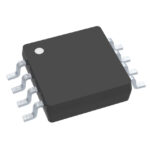 INA2290A2IDGKR
The activity of extra discounts on wholesale prices is in full swing…
Please fill in your contact information and we will send you the latest wholesale price list.






