 ChipApex | Global Electronic Components Supplier
SEARCH
Search Product
Search Post
— IC芯片 | 连接器 | 传感器 | 被动器件 —
Search productSearch post
— IC芯片 | 连接器 | 传感器 | 被动器件 —
Consult the customer manager about the wholesale price.
consultation hotline:86-132-6715-2157
email:[email protected]
Contact the product manager for consultation. One-stop consultation is available.
Do you want a lower wholesale price? Please send us your inquiry and we will reply immediately.
The INA2290A4IDGKR is a dual-channel, high-side current-sense amplifier from Texas Instruments. It operates with a supply voltage of 2.7 V to 20 V and supports a common-mode input range of 2.7 V to 120 V. The device features a fixed gain of 200 V/V (A4 suffix). Key electrical specifications include a maximum offset voltage of ±12 µV, a typical DC common-mode rejection ratio (CMRR) of 160 dB, and a quiescent current of 370 µA per channel. It offers a bandwidth of 850 kHz at the specified gain and operates within an ambient temperature range of -40°C to +125°C.
Verify the specific A4 gain variant matches the design requirement for 200 V/V amplification. Confirm package compatibility with the target PCB footprint, as this component utilizes the DGK (VSSOP-8) package. Ensure that the application circuit respects the absolute maximum ratings regarding supply voltage and common-mode limits to prevent device damage.
Select this component when dual-channel precision current monitoring is required in high-voltage environments. The A4 designation indicates a fixed 200 V/V gain, suitable for applications demanding high resolution on small differential signals. Consider the 850 kHz bandwidth for fast transient detection needs. Evaluate thermal performance based on the VSSOP-8 package characteristics if operating near maximum temperature limits.
This device belongs to the INAx290 family of ultra-precise current-sense amplifiers. While the single-channel INA290 uses an SC-70 package and the quad-channel INA4290 uses a QFN package, the INA2290 specifically provides two channels in a compact VSSOP-8 form factor. This configuration allows designers to monitor multiple current paths without increasing board space significantly compared to discrete solutions.
Direct functional replacements within the same family include the INA2290A1, INA2290A2, INA2290A3, and INA2290A5, which share identical pinouts but offer different fixed gains (20 V/V, 50 V/V, 100 V/V, and 500 V/V respectively). Cross-family substitution requires careful verification of gain, bandwidth, and package dimensions.
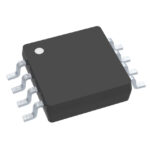 INA2290A4IDGKR
The activity of extra discounts on wholesale prices is in full swing…
Please fill in your contact information and we will send you the latest wholesale price list.






