 ChipApex | Global Electronic Components Supplier
SEARCH
Search Product
Search Post
— IC芯片 | 连接器 | 传感器 | 被动器件 —
Search productSearch post
— IC芯片 | 连接器 | 传感器 | 被动器件 —
Consult the customer manager about the wholesale price.
consultation hotline:86-132-6715-2157
email:[email protected]
Contact the product manager for consultation. One-stop consultation is available.
Do you want a lower wholesale price? Please send us your inquiry and we will reply immediately.
The INA240A4QDRQ1 is a high-side current sense amplifier from Texas Instruments, designed for automotive applications with AEC-Q100 qualification. It features a bidirectional measurement capability and operates within a common-mode voltage range of -4 V to 80 V. The device provides a fixed gain of 200 V/V and achieves a maximum gain error of 0.05%. Key electrical specifications include an input offset voltage of 5 uV, a supply current of 2.4 mA, and a 3dB bandwidth of 400 kHz. It is housed in an SOIC-8 package and supports operating temperatures from -40°C to +125°C.
Verify the specific suffix QDRQ1 to confirm the SOIC-8 package and automotive grade classification. Ensure compatibility with your PCB footprint for the SOIC-8 form factor. Confirm that the required gain of 200 V/V aligns with your system's signal conditioning needs. Check datasheet limits for common-mode voltage and supply voltage constraints before integration.
Select this component when high precision and robustness against electromagnetic interference are critical. The zero-drift technology minimizes calibration requirements compared to standard amplifiers. Consider the 80 V common-mode range for high-voltage automotive buses. Evaluate the 400 kHz bandwidth against the switching frequency of your application to ensure adequate signal fidelity without excessive noise.
This part belongs to the INA240-Q1 family of current sense amplifiers. It shares architectural similarities with other members like the INA240A4QPWRQ1 but differs in packaging. The family is characterized by its ability to handle harsh automotive electrical environments while maintaining high accuracy in current measurement tasks.
The INA240A4QPWRQ1 serves as a functional alternative with identical electrical characteristics but utilizes an 8-TSSOP package instead of SOIC-8. Verify pinout compatibility and thermal performance differences between the SOIC-8 and TSSOP-8 packages before substitution.
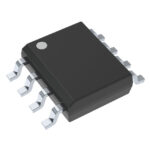 INA240A4QDRQ1
The activity of extra discounts on wholesale prices is in full swing…
Please fill in your contact information and we will send you the latest wholesale price list.






