 ChipApex | Global Electronic Components Supplier
SEARCH
Search Product
Search Post
— IC芯片 | 连接器 | 传感器 | 被动器件 —
Search productSearch post
— IC芯片 | 连接器 | 传感器 | 被动器件 —
Consult the customer manager about the wholesale price.
consultation hotline:86-132-6715-2157
email:[email protected]
Contact the product manager for consultation. One-stop consultation is available.
Do you want a lower wholesale price? Please send us your inquiry and we will reply immediately.
The INA241B2QDGSRQ1 is a bidirectional current sense amplifier from Texas Instruments, designed for automotive applications with AEC-Q100 qualification. It operates within a common-mode voltage range of -5 V to 100 V and supports a supply voltage between 2.7 V and 20 V. Key electrical specifications include a gain of 20 V/V, a common-mode rejection ratio (CMRR) of 150 dB, and an input offset voltage of 150 uV. The device features a 3dB bandwidth of 1100 kHz, an input bias current of 35 uA, and a gain error of 0.1%. It functions reliably across an operating temperature range of -40°C to +125°C and is housed in a VSSOP-10 package.
Verify the complete part number including suffixes against official Texas Instruments documentation to ensure correct packaging and automotive grade compliance. Confirm that the specific revision matches project requirements. Cross-reference datasheet parameters with system constraints before finalizing procurement orders to avoid compatibility issues.
Select this component when bidirectional current sensing is required in automotive environments with high common-mode voltages. The 20 V/V gain and 150 dB CMRR make it suitable for precise measurements where noise immunity is critical. Ensure the supply voltage and temperature range align with the target application's operational limits.
This device belongs to the INA241 family of current sense amplifiers, specifically tailored for automotive use. It offers high accuracy and robustness against electromagnetic interference. The Q1 suffix indicates AEC-Q100 qualification, ensuring reliability in demanding automotive conditions compared to standard industrial counterparts.
Check for direct pin-compatible alternatives within the INA241 series or other TI automotive current sense amplifiers. Verify that substitute parts meet the same AEC-Q100 standards and electrical specifications, particularly common-mode voltage range and gain accuracy.
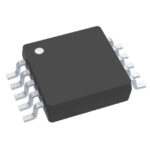 INA241B2QDGSRQ1
The activity of extra discounts on wholesale prices is in full swing…
Please fill in your contact information and we will send you the latest wholesale price list.





