 ChipApex | Global Electronic Components Supplier
SEARCH
Search Product
Search Post
— IC芯片 | 连接器 | 传感器 | 被动器件 —
Search productSearch post
— IC芯片 | 连接器 | 传感器 | 被动器件 —
Consult the customer manager about the wholesale price.
consultation hotline:86-132-6715-2157
email:[email protected]
Contact the product manager for consultation. One-stop consultation is available.
Do you want a lower wholesale price? Please send us your inquiry and we will reply immediately.
The INA280A1IDCKT is a high-precision, unidirectional current-sense amplifier manufactured by Texas Instruments. It features a wide common-mode voltage range from 2.7 V to 120 V and operates on a single supply voltage between 2.7 V and 20 V. The device provides a fixed gain of 20 V/V with a bandwidth of 1.1 MHz and a slew rate of 2 V/µs. Key electrical characteristics include a maximum offset voltage of ±150 µV, a typical DC common-mode rejection ratio (CMRR) of 140 dB, and a quiescent current of 370 µA. It is housed in a compact SC-70-5 package.
Verify that the specific part number matches the required gain option, as the A1 suffix denotes a fixed 20 V/V gain configuration. Confirm the package type corresponds to the SC-70-5 footprint for PCB layout compatibility. Ensure the operating environment stays within the specified -40°C to +125°C temperature range to maintain guaranteed performance specifications.
Select this component when a fixed 20 V/V gain is optimal for the application's dynamic range requirements. Consider the 1.1 MHz bandwidth for applications requiring fast transient response or high-frequency signal processing. Evaluate the 370 µA quiescent current against system power budgets, particularly for battery-operated devices where efficiency is critical.
This device belongs to the INA280 family of high-precision current sense amplifiers. Unlike other members of the series which offer gains of 50 V/V, 100 V/V, 200 V/V, or 500 V/V, the A1 variant specifically provides a 20 V/V gain. This lower gain setting allows for larger differential input voltages before saturation compared to higher-gain versions.
Other variants within the INA280 family, such as INA280A2IDCKR or INA280A3IDCKR, share identical pinouts and packages but feature different fixed gains. Substitution requires verifying that the new gain value aligns with the system's output voltage swing and ADC input requirements.
No, the INA280A1IDCKT is designed for unidirectional operation only, meaning it senses current flowing from the power supply to the load.
The minimum common-mode voltage is restricted by the supply voltage; it cannot be lower than the VS supply voltage under normal operating conditions.
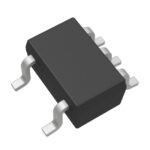 INA280A1IDCKT
The activity of extra discounts on wholesale prices is in full swing…
Please fill in your contact information and we will send you the latest wholesale price list.






