 ChipApex | Global Electronic Components Supplier
SEARCH
Search Product
Search Post
— IC芯片 | 连接器 | 传感器 | 被动器件 —
Search productSearch post
— IC芯片 | 连接器 | 传感器 | 被动器件 —
Consult the customer manager about the wholesale price.
consultation hotline:86-132-6715-2157
email:[email protected]
Contact the product manager for consultation. One-stop consultation is available.
Do you want a lower wholesale price? Please send us your inquiry and we will reply immediately.
The INA280A4IDCKT is a high-precision, unidirectional current-sense amplifier manufactured by Texas Instruments. It features a fixed gain of 200 V/V and operates with a supply voltage range of 2.7 V to 20 V. The device supports a wide common-mode input voltage from 2.7 V to 120 V, with a survival voltage up to +122 V. Key electrical characteristics include a typical DC common-mode rejection ratio (CMRR) of 140 dB, an offset voltage of ±150 µV maximum, and a quiescent current of 370 µA. It offers a bandwidth of 850 kHz at the 200 V/V gain setting and a slew rate of 2 V/µs.
Verify the specific suffix IDCKT corresponds to the SC-70 package and tape-and-reel shipping configuration. Confirm that the A4 designation matches the required 200 V/V gain for your circuit design. Ensure the operating environment stays within the specified -40°C to +125°C temperature range for guaranteed accuracy parameters.
Select this component when a fixed 200 V/V gain is optimal for maximizing ADC resolution from small shunt voltages. The high common-mode range makes it suitable for 48 V or higher bus architectures. Consider the 850 kHz bandwidth sufficient for most standard protection loops, but verify settling time requirements against your specific load dynamics.
This part belongs to the INA280 family of high-precision current sense amplifiers. Unlike bidirectional variants, the INA280 is designed strictly for unidirectional current flow from supply to load. The A4 variant specifically provides a 200 V/V gain, distinguishing it from other family members like the A1 (20 V/V) or A5 (500 V/V).
Direct functional replacements within the same family include INA280A1IDCKT, INA280A2IDCKT, INA280A3IDCKT, and INA280A5IDCKT, which share identical pinouts and packages but offer different fixed gains.
No, the INA280 series is designed exclusively for unidirectional current sensing, measuring current flowing from the power supply to the load.
To ensure linear operation, the differential input voltage should be at least 25 mV divided by the gain. For the A4 variant (200 V/V), this is approximately 125 µV.
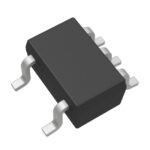 INA280A4IDCKT
The activity of extra discounts on wholesale prices is in full swing…
Please fill in your contact information and we will send you the latest wholesale price list.






