ChipApex | Global Electronic Components Supplier
SEARCH
Search Product
Search Post
— IC芯片 | 连接器 | 传感器 | 被动器件 —
Search productSearch post
— IC芯片 | 连接器 | 传感器 | 被动器件 —
Consult the customer manager about the wholesale price.
consultation hotline:86-132-6715-2157
email:[email protected]
Contact the product manager for consultation. One-stop consultation is available.
Do you want a lower wholesale price? Please send us your inquiry and we will reply immediately.
The INA296A1QDGSRQ1 is an ultra-precise, bidirectional current-sense amplifier from Texas Instruments designed for high-voltage applications. It operates with a common-mode voltage range of -5 V to 110 V and supports a supply voltage between 2.7 V and 20 V. The device features a fixed gain of 10 V/V, a bandwidth of 1.1 MHz, and a slew rate of 8 V/µs. Key electrical specifications include a maximum input offset voltage of 5 µV, a typical CMRR of 166 dB, and a gain error of 0.01%. It draws 2.5 mA of supply current and functions within a temperature range of -40°C to +125°C.
Verify the specific suffix QDGSRQ1 corresponds to the automotive-grade AEC-Q100 qualification and the VSSOP-8 package type. Confirm that the 'A' variant meets the required precision standards for your application, as this denotes tighter tolerance specifications compared to other grades. Ensure compatibility with your PCB footprint for the specified surface-mount package.
Select this component when a fixed 10 V/V gain is optimal for the shunt resistor value and output dynamic range. The A-grade specification is necessary for applications requiring the lowest possible gain error and offset voltage drift. Consider the 1.1 MHz bandwidth if rapid fault response is critical, while noting the single-channel configuration limits multi-rail monitoring capabilities.
This part belongs to the INA296x-Q1 family of ultra-precise current-sense amplifiers. It shares core architectural features with variants offering different gains (20 V/V, 50 V/V, etc.) but is uniquely configured for 10 V/V amplification. The Q1 designation indicates compliance with automotive reliability standards, distinguishing it from commercial grade counterparts.
Direct substitutes within the same family include INA296A2QDGSRQ1 (20 V/V), INA296A3QDGSRQ1 (50 V/V), INA296A4QDGSRQ1 (100 V/V), and INA296A5QDGSRQ1 (200 V/V). Non-automotive equivalents such as the INA296A series may be considered if AEC-Q100 certification is not required.
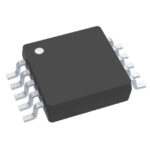 INA296A1QDGSRQ1
The activity of extra discounts on wholesale prices is in full swing…
Please fill in your contact information and we will send you the latest wholesale price list.