 ChipApex | Global Electronic Components Supplier
SEARCH
Search Product
Search Post
— IC芯片 | 连接器 | 传感器 | 被动器件 —
Search productSearch post
— IC芯片 | 连接器 | 传感器 | 被动器件 —
Consult the customer manager about the wholesale price.
consultation hotline:86-132-6715-2157
email:[email protected]
Contact the product manager for consultation. One-stop consultation is available.
Do you want a lower wholesale price? Please send us your inquiry and we will reply immediately.
The INA296A2IDDFR is a bidirectional ultra-precise current sense amplifier manufactured by Texas Instruments. It features a wide common-mode voltage range from -5V to 110V and operates on a single supply voltage between 2.7V and 20V. The device provides a fixed gain of 20V/V with a small signal bandwidth of 1.1MHz and a slew rate of 8V/µs. Key electrical characteristics include a maximum offset voltage of ±3µV, a typical CMRR of 166dB, and a maximum gain error of ±0.01%. It draws 2.5mA of quiescent current and functions within an ambient temperature range of -40°C to +125°C.
Verify the package marking code matches the DDF suffix for SOT-23-8 configuration. Confirm the 'A' grade designation indicates the specific precision tier required for your application. Ensure the ordering suffix aligns with the desired tape-and-reel quantity if applicable. Cross-reference the manufacturer part number against official distributor catalogs to validate authenticity and revision status before procurement.
Select this component when precise bidirectional current measurement is required in high-voltage environments up to 110V. The 20V/V gain option suits applications needing moderate amplification of shunt voltages while maintaining a wide output dynamic range. Consider the 1.1MHz bandwidth for fast transient protection loops. Evaluate the thermal resistance metrics if operating near the upper temperature limits or under high load currents.
This device belongs to the INA296x family of ultra-precise current sense amplifiers. The 'A' variant denotes the highest precision grade with tighter specifications for offset voltage and gain error compared to the 'B' version. The IDDFR suffix indicates the SOIC-8 or SOT-23-8 package variant depending on the specific datasheet revision context, though DDF specifically maps to SOT-23-8 in TI documentation.
INA296A2IDDR
It measures the differential voltage across the shunt resistor regardless of polarity. By connecting REF1 and REF2 appropriately (e.g., to VS and GND), the output voltage shifts above or below the reference midpoint to indicate current direction.
The device supports an operational common-mode voltage range from -5V to 110V, allowing it to function independently of its own supply voltage.
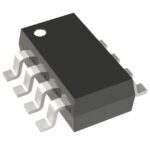 INA296A2IDDFR
The activity of extra discounts on wholesale prices is in full swing…
Please fill in your contact information and we will send you the latest wholesale price list.





