 ChipApex | Global Electronic Components Supplier
SEARCH
Search Product
Search Post
— IC芯片 | 连接器 | 传感器 | 被动器件 —
Search productSearch post
— IC芯片 | 连接器 | 传感器 | 被动器件 —
Consult the customer manager about the wholesale price.
consultation hotline:86-132-6715-2157
email:[email protected]
Contact the product manager for consultation. One-stop consultation is available.
Do you want a lower wholesale price? Please send us your inquiry and we will reply immediately.
The INA296B5IDR is a bidirectional current sense amplifier from the Texas Instruments INA296B series. It features a gain of 200 V/V and operates with a common-mode voltage range of -5V to 110V. The device provides a small signal bandwidth of 1.1MHz and a slew rate of 8V/µs. Key electrical specifications include a maximum gain error of ±0.1%, an input offset voltage of ±150µV, and a typical CMRR of 130dB. It functions on a single supply voltage between 2.7V and 20V, drawing a quiescent current of 2.5mA. The component is housed in an 8-pin SOIC package.
Verify the specific suffix IDR corresponds to the SOIC-8 package configuration before procurement. Confirm that the B-series accuracy parameters meet the system requirements for gain error and offset voltage drift. Ensure the operating temperature range aligns with the application environment. Cross-reference the datasheet revision date to ensure compatibility with existing design documentation.
Select this part when a fixed gain of 200 V/V is required for high-side or low-side current sensing. The B-series offers higher gain error tolerance compared to the A-series but maintains sufficient precision for many industrial applications. Consider the 1.1MHz bandwidth for applications requiring rapid overcurrent protection response. Verify that the output swing capabilities fit within the ADC input range of the downstream processing circuitry.
This component belongs to the INA296x family of ultra-precise current sense amplifiers designed for high-voltage applications. The family includes variants with different gains and accuracy grades (A and B series). The INA296B5 specifically targets applications needing high gain and robust common-mode rejection without the ultra-low offset characteristics of the A-series.
INA296B5IDGKR: Same electrical specifications and gain, but utilizes a VSSOP-8 package instead of SOIC-8. Verify pinout compatibility and thermal dissipation requirements when substituting packages.
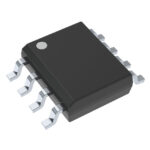 INA296B5IDR
The activity of extra discounts on wholesale prices is in full swing…
Please fill in your contact information and we will send you the latest wholesale price list.





