 ChipApex | Global Electronic Components Supplier
SEARCH
Search Product
Search Post
— IC芯片 | 连接器 | 传感器 | 被动器件 —
Search productSearch post
— IC芯片 | 连接器 | 传感器 | 被动器件 —
Consult the customer manager about the wholesale price.
consultation hotline:86-132-6715-2157
email:[email protected]
Contact the product manager for consultation. One-stop consultation is available.
Do you want a lower wholesale price? Please send us your inquiry and we will reply immediately.
The IQS211B00000000TSR is a single-channel self-capacitance proximity and touch controller from Azoteq’s ProxSense series. It features an integrated movement detection algorithm for long-term activation applications. The device supports standalone direct outputs or I2C configuration via OTP bits. It operates on a supply voltage of 1.764 V to 3.6 V with low power consumption ranging from sub-2 µA in LP mode to 80 µA at 50 Hz response. The IQS211B offers improved temperature response compared to the IQS211A, supporting a wider operating range of -40°C to 85°C. Available packages include TSOT23-6, WLCSP-8, and DFN-6.
Verify the specific package type (TSOT23-6, WLCSP-8, or DFN-6) required for your design, as availability varies by variant. Confirm that the -40°C to 85°C industrial temperature range meets your operational requirements. Ensure compatibility with existing I2C or standalone logic levels before integration. Check for any specific OTP programming needs if pre-configured settings are desired for production runs.
Select the IQS211B over the IQS211A when operation below -20°C is required, as the B variant provides improved low-temperature performance. Choose between TSOT23-6, WLCSP-8, or DFN-6 based on board space constraints and mounting preferences. Consider the sensor load capacity; up to 60 pF is supported for proximity detection, while up to 120 pF is allowed for touch applications. Verify that the chosen interface mode (I2C vs. Standalone) aligns with the system's control architecture.
The IQS211B is part of Azoteq’s IQ Switch ProxSense series, designed for ultra-low power capacitive sensing. It shares identical firmware with the IQS211A but differs in hardware optimization for better thermal stability. This component serves as a dedicated controller for proximity and touch functions, eliminating the need for complex external processing in simple activation scenarios.
The IQS211B is pin-compatible with the IQS127D, IQS128, IQS227AS, IQS228AS, and IQS231A, though output types may differ. When replacing these parts, verify that the new movement detection and output configurations meet the original design's functional requirements. Ensure that the improved temperature range of the IQS211B does not introduce unintended behavior in previously stable environments.
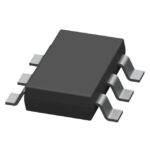 IQS211B00000000TSR
The activity of extra discounts on wholesale prices is in full swing…
Please fill in your contact information and we will send you the latest wholesale price list.







