 ChipApex | Global Electronic Components Supplier
SEARCH
Search Product
Search Post
— IC芯片 | 连接器 | 传感器 | 被动器件 —
Search productSearch post
— IC芯片 | 连接器 | 传感器 | 被动器件 —
Consult the customer manager about the wholesale price.
consultation hotline:86-132-6715-2157
email:[email protected]
Contact the product manager for consultation. One-stop consultation is available.
Do you want a lower wholesale price? Please send us your inquiry and we will reply immediately.
The IQS228B00000000DNR is a single-channel self-capacitive proximity and touch sensor from the Azoteq ProxSense series. It operates on a supply voltage of 1.8 V to 3.6 V with a low power consumption of 2.5 µA in low power mode. The device features Dynamic Calibration (DYCAL™) for drift compensation during prolonged activation, automatic tuning implementation (ATI), and user-selectable options via One Time Programmable (OTP) memory. Communication is supported through I2C debug interface or 1-Wire data streaming. It is available in WLCSP-8 packaging and functions within an operating temperature range of -40°C to +85°C.
Verify the exact ordering suffix against the manufacturer's current datasheet revision to ensure correct package type and factory configuration. Confirm OTP settings match application requirements as they are non-reprogrammable after manufacturing. Check RoHS compliance status and lead times with authorized distributors prior to finalizing procurement plans.
Select this model for applications requiring a single-channel capacitive solution with robust drift compensation. Ensure the supply voltage remains within the 1.8 V to 3.6 V range. Consider the WLCSP-8 package constraints for PCB layout. Verify if pre-configured OTP options are sufficient or if custom programming via the Configuration Tool is necessary for the specific use case.
This component belongs to the IQS228B/D family, which includes variants like IQS228B00000000CSR and IQS228B0101408CTSR. These devices share the same core sensing technology but differ in package types such as TSOT-23-6, DFN-6, and WLCSP-8, as well as factory-set OTP configurations. The 'DNR' suffix typically denotes a specific reel packaging format and factory default configuration.
Direct replacements include other IQS228B variants with compatible packages and electrical specifications. Ensure substitute parts support the required 1.8 V to 3.6 V supply range and WLCSP-8 footprint. Verify that the replacement part's OTP configuration matches the original design requirements to avoid functional discrepancies.
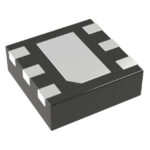 IQS228B00000000DNR
The activity of extra discounts on wholesale prices is in full swing…
Please fill in your contact information and we will send you the latest wholesale price list.





