 ChipApex | Global Electronic Components Supplier
SEARCH
Search Product
Search Post
— IC芯片 | 连接器 | 传感器 | 被动器件 —
Search productSearch post
— IC芯片 | 连接器 | 传感器 | 被动器件 —
Consult the customer manager about the wholesale price.
consultation hotline:86-132-6715-2157
email:[email protected]
Contact the product manager for consultation. One-stop consultation is available.
Do you want a lower wholesale price? Please send us your inquiry and we will reply immediately.
The IQS231B00000000TSR is a single-channel self-capacitance controller designed for SAR applications, featuring proximity and touch detection. It operates on a supply voltage of 1.75V to 3.6V within an industrial temperature range of -40°C to +85°C. The device utilizes an I2C interface for configuration and data retrieval, housed in a TSOT-23-6 package. Key electrical parameters include a capacitive resolution down to 0.02fF and a maximum capacitive load capability of 120pF. It supports multiple sampling frequencies, including 30Hz, 100Hz, 8Hz, and 4Hz.
Verify the specific ordering suffix against the manufacturer's datasheet to ensure correct OTP configuration and package type. Confirm that the component meets RoHS compliance requirements for your target market. Cross-reference the part number with official distributor catalogs to validate authenticity and current availability status before finalizing procurement orders.
Select this model when a single-channel solution with low power consumption is required for SAR compliance. Ensure the design accommodates the TSOT-23-6 footprint and provides adequate decoupling capacitance on the VREG pin. Consider the I2C address settings if multiple sensors are present on the bus. Verify that the external sense electrode area aligns with the device's capacitive load limits.
This component belongs to the Azoteq ProxSense series, specifically engineered for mobile device safety and interaction. It serves as a specialized sensor interface replacing discrete solutions, offering integrated calibration and state machine automation. The IQS231B variant provides improved thermal performance compared to its predecessor, ensuring stable operation across wider environmental conditions.
The IQS231A is functionally compatible but lacks the enhanced temperature response of the IQS231B. Verify pin compatibility with existing TSOT-23-6 designs. No direct drop-in replacements are officially documented; consult Azoteq for alternative part numbers if form factor constraints differ.
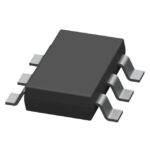 IQS231B00000000TSR
The activity of extra discounts on wholesale prices is in full swing…
Please fill in your contact information and we will send you the latest wholesale price list.







