 ChipApex | Global Electronic Components Supplier
SEARCH
Search Product
Search Post
— IC芯片 | 连接器 | 传感器 | 被动器件 —
Search productSearch post
— IC芯片 | 连接器 | 传感器 | 被动器件 —
Consult the customer manager about the wholesale price.
consultation hotline:86-132-6715-2157
email:[email protected]
Contact the product manager for consultation. One-stop consultation is available.
Do you want a lower wholesale price? Please send us your inquiry and we will reply immediately.
The IQS263B-0-DNR is a 3-channel capacitive touch and proximity controller from Azoteq's ProxSense series. It supports self or mutual capacitance modes with an 8-bit resolution slider or scroll wheel configuration. The device features automatic tuning implementation (ATI), movement detection, and flick gesture recognition. Operating on a supply voltage of 1.8V to 3.6V, it communicates via a fast I2C interface in event or streaming modes. Available in MSOP-10 and DFN-10 packages, it includes hibernation mode for low-power battery applications.
Verify the specific ordering suffix against the manufacturer's current datasheet to confirm package type and revision level. Ensure compatibility with the host controller's I2C voltage levels and protocol requirements. Confirm that the selected variant meets the necessary SAR compliance standards for the target mobile device application.
Select this component when a compact solution for up to three capacitive channels is required. It is suitable for designs needing integrated proximity sensing alongside touch inputs. Consider the internal regulator and reference capacitor to reduce external component count. Evaluate the need for specific gesture recognition features like flicks or taps before finalizing the design.
This part belongs to the Azoteq ProxSense IQ Switch series, designed for high-sensitivity capacitive sensing. The IQS263B specifically targets applications requiring minimal channel counts with advanced gesture capabilities. It complements larger multi-channel controllers by offering a cost-effective solution for simpler interfaces while maintaining high signal-to-noise ratios.
Check for direct pin-compatible upgrades within the IQS263 family. Verify if alternative sensors offer similar channel counts and gesture support. Ensure any substitute maintains the required I2C interface and operating voltage range of 1.8V to 3.6V.
Yes, the device can be configured by the host controller to operate in either self-capacitive or projected-capacitive mode via the System Flags register.
The IC supports tap gestures on sliders or scroll wheels, and left and right flick gestures on slider configurations.
It uses Automatic Tuning Implementation (ATI) to automatically retune sensor electrodes when counts drift outside a predefined band, ensuring optimal sensitivity.
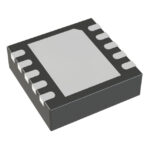 IQS263B-0-DNR
The activity of extra discounts on wholesale prices is in full swing…
Please fill in your contact information and we will send you the latest wholesale price list.





