 ChipApex | Global Electronic Components Supplier
SEARCH
Search Product
Search Post
— IC芯片 | 连接器 | 传感器 | 被动器件 —
Search productSearch post
— IC芯片 | 连接器 | 传感器 | 被动器件 —
Consult the customer manager about the wholesale price.
consultation hotline:86-132-6715-2157
email:[email protected]
Contact the product manager for consultation. One-stop consultation is available.
Do you want a lower wholesale price? Please send us your inquiry and we will reply immediately.
The IQS7211E002QFR is a capacitive touch and proximity trackpad controller from Azoteq's ProxSense series, housed in a QFN20 package. It supports up to 13 external sensor pad connections with self- or mutual-capacitive configurations. The device features automatic tuning, low power proximity detection, and single finger gesture recognition. It operates on a supply voltage of 1.8 V to 3.5 V and communicates via an I2C interface supporting speeds up to 1 MHz. The component provides high-resolution coordinate outputs at rates up to 100 Hz and includes integrated noise filtering and water immunity features.
Verify the specific ordering suffix 'QFR' corresponds to the QFN20 package variant when sourcing. Confirm that the pre-programmed settings align with the intended application requirements, as the device supports auto-run from programmed settings. Ensure compatibility with the required I2C bus speed and voltage levels during integration planning.
Select this model for applications requiring a compact footprint with integrated gesture processing. The QFN20 package offers 13 sensor connections, suitable for smaller trackpad layouts. Consider the internal voltage regulator and automatic tuning features if minimizing external components and production calibration steps is a priority.
This component belongs to the IQS7211E series within Azoteq's ProxSense portfolio. It is designed as a versatile solution for small form-factor devices needing reliable touch input. The series emphasizes low power consumption and ease of integration through automated tuning and pre-programmable memory options.
Check for other variants in the IQS7211E family, such as those in WLCSP18 packages, if board space constraints differ. Verify pinout compatibility if substituting with other ProxSense controllers, as channel counts and package types vary across the series.
The IQS7211E supports up to 2 fingers tracking simultaneously.
No, the system automatically compensates for mechanical and temperature changes, eliminating the need for production line calibration.
The device supports an I2C communication interface with speeds up to Fast Plus mode, which is 1 MHz.
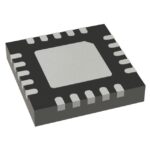 IQS7211E002QFR
The activity of extra discounts on wholesale prices is in full swing…
Please fill in your contact information and we will send you the latest wholesale price list.





