 ChipApex | Global Electronic Components Supplier
SEARCH
Search Product
Search Post
— IC芯片 | 连接器 | 传感器 | 被动器件 —
Search productSearch post
— IC芯片 | 连接器 | 传感器 | 被动器件 —
Consult the customer manager about the wholesale price.
consultation hotline:86-132-6715-2157
email:[email protected]
Contact the product manager for consultation. One-stop consultation is available.
Do you want a lower wholesale price? Please send us your inquiry and we will reply immediately.
The IS4N45XSM is a single-channel optoisolator manufactured by Isocom Components 2004 LTD. It features an infrared LED input paired with a Darlington transistor output that includes a base terminal for enhanced performance control. The device provides high isolation capability with a rated voltage of 5300Vrms. It is housed in a compact 6-SMD, Gull Wing surface-mount package, designed for efficient integration into modern circuit boards requiring reliable signal transmission across isolated domains.
Verify the specific suffix designation against official manufacturer documentation to confirm exact packaging and tape-and-reel specifications. Ensure the selected variant matches the required lead time and quality standards for your production schedule. Cross-reference the datasheet revision history to confirm compatibility with existing design parameters before finalizing procurement orders.
Select this component when a Darlington output configuration is necessary to achieve higher current transfer ratios compared to standard phototransistor outputs. The inclusion of a base terminal allows designers to optimize switching speed or sensitivity by adding external resistors. This part is suitable for applications where moderate propagation delay is acceptable but high gain is required.
This device belongs to the broader category of optically coupled isolators produced by Isocom Components 2004 LTD. The company specializes in infrared optoelectronic devices with decades of industry experience. The IS4N45XSM represents their surface-mount technology offerings, providing a compact alternative to through-hole solutions while maintaining high isolation voltage ratings for industrial and commercial electronics.
Direct substitutes include other single-channel Darlington output optocouplers with similar 5300Vrms isolation ratings and compatible SMD footprints. Verify pinout alignment and current transfer ratio specifications before substitution. Equivalent parts from other manufacturers may require evaluation of propagation delay differences.
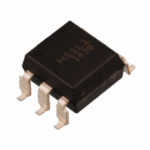 IS4N45XSM
The activity of extra discounts on wholesale prices is in full swing…
Please fill in your contact information and we will send you the latest wholesale price list.







