 ChipApex | Global Electronic Components Supplier
SEARCH
Search Product
Search Post
— IC芯片 | 连接器 | 传感器 | 被动器件 —
Search productSearch post
— IC芯片 | 连接器 | 传感器 | 被动器件 —
Consult the customer manager about the wholesale price.
consultation hotline:86-132-6715-2157
email:[email protected]
Contact the product manager for consultation. One-stop consultation is available.
Do you want a lower wholesale price? Please send us your inquiry and we will reply immediately.
The IS6005SMT&R is a surface mount optocoupler featuring a triac output stage, manufactured by Isocom Components. It provides electrical isolation between input and output circuits with a specified isolation voltage of 5.3 kVrms. The device utilizes a non-zero crossing detection mechanism for the triac output, supporting load voltages up to 400 V. Packaged in a compact 6-pin SMD configuration, it is designed for applications requiring reliable signal transmission across isolated domains while maintaining high voltage withstand capabilities.
Verify that the specific suffix 'SMT&R' corresponds to the Tape & Reel packaging format as indicated in official documentation. Confirm the manufacturer designation matches Isocom Components 2004 LTD to ensure component authenticity. Cross-reference the datasheet for exact pinout configurations and thermal specifications relevant to your PCB layout requirements before finalizing procurement orders.
Select this component when non-zero crossing triac output functionality is required for AC load control. Ensure the system design accommodates the 5.3 kVrms isolation rating for adequate safety margins. Verify that the surface mount package dimensions align with the available board space and soldering capabilities of the manufacturing process.
This part belongs to the family of optoisolators utilizing triac outputs for AC switching applications. It differs from zero-crossing variants by allowing phase-angle control, which is essential for dimming or speed regulation tasks. The surface mount variant offers advantages in automated assembly processes compared to through-hole alternatives.
Publicly confirmed substitute part numbers are not available in the provided source material. When evaluating alternatives, ensure compatibility regarding isolation voltage ratings, output type (triac), and package footprint to maintain circuit integrity without redesign.
No, the device features non-zero crossing detection, making it suitable for phase-control applications rather than noise-reduction switching.
The component provides an isolation voltage rating of 5.3 kVrms between the input LED and the output triac.
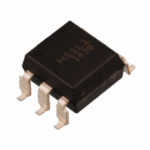 IS6005SMT&R
The activity of extra discounts on wholesale prices is in full swing…
Please fill in your contact information and we will send you the latest wholesale price list.





