 ChipApex | Global Electronic Components Supplier
SEARCH
Search Product
Search Post
— IC芯片 | 连接器 | 传感器 | 被动器件 —
Search productSearch post
— IC芯片 | 连接器 | 传感器 | 被动器件 —
Consult the customer manager about the wholesale price.
consultation hotline:86-132-6715-2157
email:[email protected]
Contact the product manager for consultation. One-stop consultation is available.
Do you want a lower wholesale price? Please send us your inquiry and we will reply immediately.
The ISD1416SI is a single-chip voice record/playback device from the ISD1400 series, offering a nominal duration of 16 seconds. It operates on a single +5V supply with an operating range of 4.5V to 5.5V. The device features an internal sampling frequency of 8.0 kHz and a filter passband of 3.3 kHz. It utilizes patented Multi-Level Storage (MLS) for non-volatile message storage, supporting up to 100,000 record cycles and 100-year retention. The component includes an on-chip oscillator, microphone preamplifier with Automatic Gain Control (AGC), anti-aliasing filter, smoothing filter, and speaker amplifier. Standby current is typically 0.5 µA.
Verify the manufacturer origin as Winbond Technology Corporation, as the ISD1400 series was originally developed by Winbond before being acquired by Nuvoton. Confirm the package type matches the SI suffix (28-lead SOIC). Check for lead-free compliance if required by local regulations, as datasheets indicate both leaded and lead-free packaged types are available. Ensure the specific revision aligns with current design-in requirements.
Select the ISD1416SI when a fixed 16-second recording duration at 8.0 kHz sampling rate is sufficient. Choose this part over the ISD1420 if shorter duration allows for smaller memory allocation or cost optimization. Consider the external clock pin (XCLK) if precise timing stability beyond the internal oscillator's tolerance is required for the application environment.
The ISD1416SI belongs to the ISD1400 ChipCorder series, which provides high-quality, single-chip solutions for short-duration messaging. This series is characterized by its ability to store voice signals directly in non-volatile memory cells, eliminating the need for complex digital signal processing components. The family includes variants like the ISD1420 for longer durations.
ISD1420SI offers similar functionality with a 20-second duration and 6.4 kHz sampling rate. For applications requiring different durations within the same series, verify compatibility with existing address decoding and timing constraints.
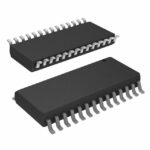 ISD1416SI
The activity of extra discounts on wholesale prices is in full swing…
Please fill in your contact information and we will send you the latest wholesale price list.





