 ChipApex | Global Electronic Components Supplier
SEARCH
Search Product
Search Post
— IC芯片 | 连接器 | 传感器 | 被动器件 —
Search productSearch post
— IC芯片 | 连接器 | 传感器 | 被动器件 —
Consult the customer manager about the wholesale price.
consultation hotline:86-132-6715-2157
email:[email protected]
Contact the product manager for consultation. One-stop consultation is available.
Do you want a lower wholesale price? Please send us your inquiry and we will reply immediately.
The ISD1420SYR is a single-chip voice record/playback device from the ISD1400 series, manufactured by Winbond Technology. It utilizes Multi-Level Storage (MLS) technology to store analog audio signals directly in non-volatile memory without digitization or compression. The device provides a nominal recording and playback duration of 20 seconds with a sampling frequency of 6.4 kHz. It operates on a single +5V supply and includes an on-chip oscillator, microphone preamplifier, automatic gain control, anti-aliasing filter, smoothing filter, and speaker amplifier. The component supports manual switch or microcontroller-compatible control via edge- or level-activated inputs.
Verify the manufacturer origin as Winbond Technology Corporation, not Nuvoton, despite the input brand. Confirm the package type corresponds to the 'SYR' suffix, which typically indicates a SOIC-28 lead-free package. Ensure the revision level matches the datasheet Rev 1.3 for accurate electrical characteristics. Check for industrial vs. commercial temperature grade requirements based on the specific application environment.
Select the ISD1420SYR when a 20-second recording duration is required. Choose this model over the ISD1416 if longer message capacity is needed. Consider external clocking via the XCLK pin if precise timing stability beyond the internal oscillator's tolerance is necessary. Verify that the system can accommodate the 16 Ω minimum speaker impedance for direct drive applications.
The ISD1420SYR belongs to the ISD1400 series of ChipCorder devices. This family includes variants with different durations, such as the ISD1416 for 16-second recordings. The series is designed for simple integration into embedded systems, offering a complete solution with minimal external components compared to digital voice ICs that require separate memory and codec chips.
The ISD1416 is a compatible alternative within the same series but offers a shorter 16-second duration. Other ISD1400 series members share similar pinouts and operational modes but differ in memory size and sampling rates. Direct substitution requires verifying the specific duration requirement and ensuring the replacement part meets the thermal and voltage specifications of the original design.
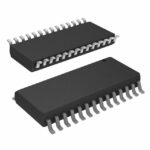 ISD1420SYR
The activity of extra discounts on wholesale prices is in full swing…
Please fill in your contact information and we will send you the latest wholesale price list.





