 ChipApex | Global Electronic Components Supplier
SEARCH
Search Product
Search Post
— IC芯片 | 连接器 | 传感器 | 被动器件 —
Search productSearch post
— IC芯片 | 连接器 | 传感器 | 被动器件 —
Consult the customer manager about the wholesale price.
consultation hotline:86-132-6715-2157
email:[email protected]
Contact the product manager for consultation. One-stop consultation is available.
Do you want a lower wholesale price? Please send us your inquiry and we will reply immediately.
The ISD1610BSYIR is a single-chip voice recording and playback device manufactured by Nuvoton Technology Corporation. It utilizes proprietary Direct Audio Storage (DAS) technology to store digital audio data directly in on-chip Flash memory without requiring external compression or decompression algorithms. The device supports variable bit rate recording, allowing for flexible trade-offs between recording duration and audio quality. It integrates a high-performance DSP core optimized for speech processing, enabling low-power operation suitable for battery-powered applications. The component features a serial interface for command control and direct audio output capabilities.
Verify the specific suffix 'SYIR' against the official Nuvoton datasheet to confirm package type, temperature range, and tape-and-reel specifications. Ensure compatibility with existing serial interface voltage levels and clock requirements before integration. Cross-reference the part number with the latest product brief to confirm availability and any recent design revisions.
Select this component when system design requires standalone voice functionality without complex external memory management. Consider the ISD1610BSYIR for applications needing moderate recording durations with clear speech reproduction. Evaluate power consumption metrics against battery life requirements, as the device offers various power-down modes. Compare pin counts and interface options with alternative models if space or I/O constraints are critical.
The ISD1610BSYIR belongs to the ISD5000/ISD4000 series family of voice recorders from Nuvoton. This series is characterized by its use of DAS technology, which simplifies hardware design by integrating Flash memory and DSP functions into a single package. It serves as a cost-effective solution for mass-produced consumer electronics requiring reliable voice interaction capabilities.
Check for direct pin-to-pin compatible upgrades within the ISD5000 series that offer increased storage capacity. Verify if newer generations support higher sampling rates or additional recording modes required by updated product specifications. Ensure substitute parts maintain the same serial communication protocol to avoid firmware modifications.
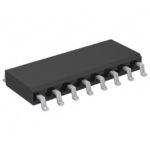 ISD1610BSYIR
The activity of extra discounts on wholesale prices is in full swing…
Please fill in your contact information and we will send you the latest wholesale price list.





