 ChipApex | Global Electronic Components Supplier
SEARCH
Search Product
Search Post
— IC芯片 | 连接器 | 传感器 | 被动器件 —
Search productSearch post
— IC芯片 | 连接器 | 传感器 | 被动器件 —
Consult the customer manager about the wholesale price.
consultation hotline:86-132-6715-2157
email:[email protected]
Contact the product manager for consultation. One-stop consultation is available.
Do you want a lower wholesale price? Please send us your inquiry and we will reply immediately.
The ISD17240PY01 is a multi-message single-chip voice record and playback device from the Winbond ISD1700 ChipCorder Series. It features an operating voltage range of 2.4V to 5.5V and supports selectable sampling frequencies from 4 kHz to 12 kHz, determined by an external oscillator resistor. The device provides a maximum message duration of 480 seconds at 4 kHz sampling. It incorporates Multi-Level Storage (MLS) technology for direct audio data storage in on-chip Flash memory without digital compression. The unit includes a differential microphone input with Automatic Gain Control (AGC), an auxiliary analog input, and dual output channels consisting of a PWM Class D speaker driver and a configurable analog output.
Verify the specific ordering suffix against the manufacturer's current datasheet to confirm package type, temperature rating, and lead-free status. The 'P' indicates a Plastic Dual Inline Package, 'Y' denotes lead-free construction, and 'I' signifies industrial temperature range. Confirm availability as specifications are subject to change without notice.
Select this component when a long message duration up to 480 seconds is required. Ensure the external oscillator resistor value matches the desired sampling frequency between 4 kHz and 12 kHz. Verify that the 2.4V to 5.5V supply voltage aligns with the system design. Consider the 28-lead PDIP package dimensions if mechanical constraints require through-hole mounting.
This part belongs to the Winbond ISD1700 ChipCorder Series, which offers various message durations ranging from 20 to 480 seconds. The series shares common architectural features such as MLS technology, AGC microphone preamplifiers, and dual output configurations. Other models in the series provide shorter durations or different package options while maintaining the same core voice recording and playback capabilities.
ISD17210: Offers a maximum duration of 420 seconds. ISD17180: Provides a maximum duration of 360 seconds. ISD17150: Supports up to 300 seconds of recording time. These alternatives share the same interface and operational characteristics but differ in available message storage capacity.
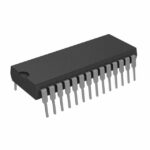 ISD17240PY01
The activity of extra discounts on wholesale prices is in full swing…
Please fill in your contact information and we will send you the latest wholesale price list.




