 ChipApex | Global Electronic Components Supplier
SEARCH
Search Product
Search Post
— IC芯片 | 连接器 | 传感器 | 被动器件 —
Search productSearch post
— IC芯片 | 连接器 | 传感器 | 被动器件 —
Consult the customer manager about the wholesale price.
consultation hotline:86-132-6715-2157
email:[email protected]
Contact the product manager for consultation. One-stop consultation is available.
Do you want a lower wholesale price? Please send us your inquiry and we will reply immediately.
The ISD1790SYI01 is a multi-message single-chip voice record and playback device from the ISD1700 series. It features user-selectable message durations ranging from 60 to 180 seconds, determined by an external oscillator resistor that sets the sampling frequency between 4 kHz and 12 kHz. The device operates on a supply voltage of 2.4 V to 5.5 V and supports both standalone push-button and microcontroller SPI modes. Key electrical parameters include a typical standby current of 1 µA, a speaker output power of up to 670 mW at 5.5 V into an 8 Ω load, and a gain from microphone to speaker outputs of 6 dB to 40 dB with Automatic Gain Control.
Verify the specific ordering suffix against official manufacturer documentation to confirm package type, temperature rating, and special feature configurations such as vAlert support. Ensure compatibility with required sampling frequencies and message duration constraints defined by the external oscillator resistor selection.
Select this component when a fully integrated solution for multi-message recording and playback is required without external digital signal processing. Consider the available message duration ranges relative to the desired sampling frequency to balance audio quality against storage capacity. Evaluate the need for standalone versus SPI operation based on system complexity and interface availability.
This part belongs to the ISD1700 ChipCorder series, which utilizes patented Multi-Level Storage technology for direct audio data storage in solid-state memory. The series is designed for high-quality voice and music reproduction, offering flexibility in duration and quality through adjustable sampling rates controlled by external components.
Consult official datasheets for cross-referencing within the ISD1700 family. Other models in the series offer different message duration ranges (e.g., ISD1730, ISD1740) while maintaining similar pinouts and operational characteristics. Verify functional equivalence regarding voltage ranges and interface protocols before substitution.
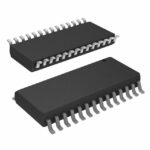 ISD1790SYI01
The activity of extra discounts on wholesale prices is in full swing…
Please fill in your contact information and we will send you the latest wholesale price list.





