 ChipApex | Global Electronic Components Supplier
SEARCH
Search Product
Search Post
— IC芯片 | 连接器 | 传感器 | 被动器件 —
Search productSearch post
— IC芯片 | 连接器 | 传感器 | 被动器件 —
Consult the customer manager about the wholesale price.
consultation hotline:86-132-6715-2157
email:[email protected]
Contact the product manager for consultation. One-stop consultation is available.
Do you want a lower wholesale price? Please send us your inquiry and we will reply immediately.
The ISD1916SYI is a single-chip multiple-message record/playback device from the ISD1900 ChipCorder series by Nuvoton Technology Corporation. It supports dual operating modes: Address Mode and Direct Mode, allowing flexible message configuration via hardware pins. The device operates on a supply voltage ranging from 2.4V to 5.5V. Sampling frequency is selectable from 4 kHz to 12 kHz using an external resistor (Rosc), which also determines the maximum recording duration of up to 32 seconds at 4 kHz. It features differential microphone inputs with automatic gain control (AGC) and a Class-D PWM speaker driver for direct audio output.
Verify the specific suffix 'SYI' against the manufacturer's official ordering information to confirm package type and temperature grade. Ensure the design accounts for the required external oscillator resistor value to set the desired sampling frequency and memory duration. Confirm that the application circuit provides stable power within the 2.4V to 5.5V range to prevent malfunction during abrupt power interruptions.
Select this component when standalone voice recording and playback are required without a microcontroller. Choose based on the necessary message duration and number of messages; the ISD1916 offers approximately 10.6 to 32 seconds depending on the selected sampling rate. Consider the Direct Mode if fixed-duration messages are preferred over variable-length segments defined by address pins.
The ISD1916SYI belongs to the ISD1900 series, which includes variants like ISD1932 and ISD1964 offering larger memory capacities. These devices share the same pinout and operational principles but differ in total recording time. The series is designed for cost-effective voice applications where low power consumption and ease of integration are primary requirements.
The ISD1932SYI and ISD1964SYI are compatible alternatives within the same series, providing longer recording durations while maintaining identical pin configurations and operational modes. Verify that the increased memory capacity does not impact the physical footprint or power requirements of the existing design.
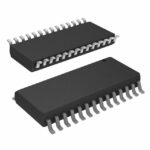 ISD1916SYI
The activity of extra discounts on wholesale prices is in full swing…
Please fill in your contact information and we will send you the latest wholesale price list.





