 ChipApex | Global Electronic Components Supplier
SEARCH
Search Product
Search Post
— IC芯片 | 连接器 | 传感器 | 被动器件 —
Search productSearch post
— IC芯片 | 连接器 | 传感器 | 被动器件 —
Consult the customer manager about the wholesale price.
consultation hotline:86-132-6715-2157
email:[email protected]
Contact the product manager for consultation. One-stop consultation is available.
Do you want a lower wholesale price? Please send us your inquiry and we will reply immediately.
The ISD2130YYIR is a digital audio playback device from the Nuvoton ISD2100 series, featuring 30 seconds of storage based on 8kHz/4bit ADPCM compression within 1Mbit flash memory. It operates on a supply voltage range of 2.7V to 3.6V with a maximum clock frequency and sampling rate of 32 kHz. The component utilizes an SPI interface for control and programming, housed in a QFN-20 package. It draws 5 mA during operation and functions reliably between -40°C and +85°C.
Verify the specific ordering suffix YYIR corresponds to the QFN-20 package and industrial temperature grade (-40°C to +85°C) required for your design. Confirm that the host system supports the standard four-wire SPI interface mode 3 for communication. Ensure power supply rails remain within the 2.7V to 3.6V operating range to maintain signal integrity and compliance with absolute maximum ratings.
Select this model when 30 seconds of high-quality audio storage is sufficient for the application. The QFN-20 package is suitable for surface-mount assembly where space efficiency is prioritized over the SOP-14 alternative. Consider the integrated PWM driver if driving an 8Ω speaker directly, avoiding the need for external amplification circuitry.
This component belongs to the ISD2100 series of ChipCorder devices, which provide single-chip digital audio storage and playback. The series includes variants like the ISD2115A with 15 seconds of storage and different packaging options such as SOP-14. All members share the same core architecture, including the Voice Macro scripting capability and SPI interface.
The ISD2130SYI serves as a functional substitute offering identical electrical specifications and features but utilizes an SOP-14 package instead of QFN-20. Designers must account for pinout differences and footprint changes when transitioning between these package types.
Audio is stored as Voice Prompts addressed by a simple sequential index number rather than absolute memory addresses, allowing updates without changing host controller code.
Yes, the device can operate stand-alone by assigning Voice Macros to its GPIO trigger pins, enabling autonomous playback sequences.
The device supports µ-Law, Differential µ-Law, PCM, and Enhanced ADPCM compression algorithms with variable bit rates optimized for SNR and noise levels.
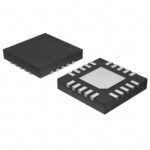 ISD2130YYIR
The activity of extra discounts on wholesale prices is in full swing…
Please fill in your contact information and we will send you the latest wholesale price list.





