 ChipApex | Global Electronic Components Supplier
SEARCH
Search Product
Search Post
— IC芯片 | 连接器 | 传感器 | 被动器件 —
Search productSearch post
— IC芯片 | 连接器 | 传感器 | 被动器件 —
Consult the customer manager about the wholesale price.
consultation hotline:86-132-6715-2157
email:[email protected]
Contact the product manager for consultation. One-stop consultation is available.
Do you want a lower wholesale price? Please send us your inquiry and we will reply immediately.
The ISL21009BFB50ZR5314T is a series voltage reference IC from Renesas Electronics, part of the FGA™ family. It provides a fixed 5V output with an initial accuracy tolerance of ±0.04%. The device operates within an input voltage range of 3.5V to 16.5V and draws a supply current of 180µA. It features a maximum temperature coefficient of 3ppm/°C and supports an output current of 7 mA. Low-frequency noise is specified at 4.5µVp-p (0.1Hz to 10Hz) and 22µVrms (10Hz to 1kHz). The component is housed in an 8-SOIC package and functions reliably across a temperature range of -40°C to +125°C.
Verify authenticity carefully as this component is officially obsolete. Check manufacturing date codes against available stock sources. Confirm package integrity and pin alignment upon receipt. Ensure compliance with RoHS3 standards if required by your assembly specifications. Request detailed traceability documentation from suppliers to mitigate counterfeiting risks associated with end-of-life parts.
Select this component when a fixed 5V reference with ±0.04% accuracy is required. Consider the 180µA supply current for power budgeting. Evaluate the 8-SOIC package constraints for PCB layout. Compare noise specifications against application needs. Verify input voltage compatibility within the 3.5V to 16.5V range. Assess thermal management requirements for the -40°C to +125°C operating range.
This part belongs to the ISL21009 series of precision voltage references. It utilizes advanced bipolar technology to achieve sub-microvolt noise levels. The series offers multiple output voltage options including 1.25V, 2.5V, and 7.5V variants. The specific suffix indicates the 5V output version in tape and reel packaging. It is designed for surface-mount applications in compact electronic designs.
Publicly confirmed substitute part numbers are not available for this obsolete component. Engineers should evaluate equivalent precision voltage references from other manufacturers. Verify matching electrical parameters such as accuracy, noise, and temperature coefficient. Ensure physical footprint compatibility with existing PCB layouts during transition planning.
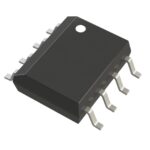 ISL21009BFB50ZR5314T
The activity of extra discounts on wholesale prices is in full swing…
Please fill in your contact information and we will send you the latest wholesale price list.







