 ChipApex | Global Electronic Components Supplier
SEARCH
Search Product
Search Post
— IC芯片 | 连接器 | 传感器 | 被动器件 —
Search productSearch post
— IC芯片 | 连接器 | 传感器 | 被动器件 —
Consult the customer manager about the wholesale price.
consultation hotline:86-132-6715-2157
email:[email protected]
Contact the product manager for consultation. One-stop consultation is available.
Do you want a lower wholesale price? Please send us your inquiry and we will reply immediately.
The ISL21009BFB841Z is a high-precision voltage reference utilizing Intersil's proprietary Floating Gate Analog (FGA) technology. It provides a fixed output of 4.096V with an initial accuracy of ±0.5mV and a temperature coefficient of 3ppm/°C. The device operates within an input voltage range of 4.5V to 16.5V, drawing a maximum supply current of 180µA. It features low noise performance of 4.5µVp-p in the 0.1Hz to 10Hz bandwidth and supports up to ±5.0mA output current. Packaged in an 8-lead SOIC, it functions across a temperature range of -40°C to +125°C.
Verify component authenticity through authorized channels as this part may be subject to obsolescence or discontinuation notices. Confirm that the specific ordering suffix matches the required electrical grade and package type. Ensure handling procedures account for electrostatic discharge sensitivity. Review datasheet notes regarding post-reflow voltage shifts and X-ray shielding requirements for final assembly validation.
Select this component when designing systems requiring high precision with minimal power consumption. The 4.096V output is ideal for driving 12-bit sub-ranging DACs or instrumentation amplifiers. Consider the 3ppm/°C temperature coefficient for environments with significant thermal variations. Evaluate the need for external trimming if tighter tolerance than ±0.5mV is required.
This device belongs to the ISL21009 FGA™ family of voltage references manufactured by Renesas Electronics Corporation (formerly Intersil). The family includes variants with different output voltages (1.25V, 2.5V, 5.0V) and accuracy grades. The 'B' designation indicates the highest accuracy grade (±0.5mV) and lowest temperature coefficient (3ppm/°C) within the series.
ISL21009CFB841Z
The floating gate stores charge precisely during manufacturing, resulting in excellent long-term stability and very low temperature drift compared to standard bandgap references.
To maintain accuracy, mount the device near the edge of the PCB or in a cutout to minimize die stress from board flexing during thermal cycling.
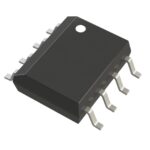 ISL21009BFB841Z
The activity of extra discounts on wholesale prices is in full swing…
Please fill in your contact information and we will send you the latest wholesale price list.






