ChipApex | Global Electronic Components Supplier
SEARCH
Search Product
Search Post
— IC芯片 | 连接器 | 传感器 | 被动器件 —
Search productSearch post
— IC芯片 | 连接器 | 传感器 | 被动器件 —
Consult the customer manager about the wholesale price.
consultation hotline:86-132-6715-2157
email:[email protected]
Contact the product manager for consultation. One-stop consultation is available.
Do you want a lower wholesale price? Please send us your inquiry and we will reply immediately.
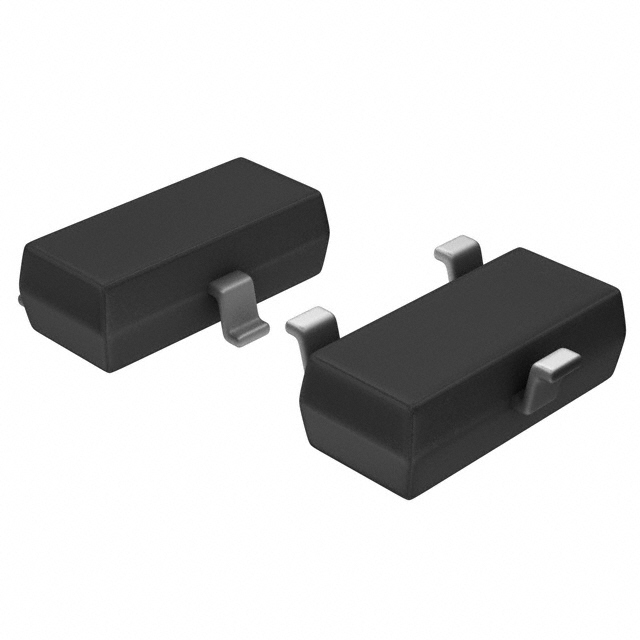
The ISL21010DFH312Z-TK is a micropower voltage reference IC manufactured by Renesas Electronics Corporation. It provides a fixed 1.25V output with ±0.2% initial accuracy. The device operates from a single supply voltage ranging from 2.2V to 5.5V and features a low dropout voltage of 150mV. It delivers an output current source capability of up to 25mA while consuming only 48μA of typical supply current. The component is housed in a space-saving 3-lead SOT-23 package and supports an operating temperature range from -40°C to +125°C.
Verify the specific suffix Z-TK indicates tape and reel packaging when ordering. Confirm the DFH312 designation corresponds to the 1.25V output variant. Ensure compatibility with standard SOT-23 footprint requirements during PCB layout. Check for RoHS compliance status if required by project specifications. Validate that the 2.2V minimum input voltage meets system supply constraints.
Select this component when a low-cost, high-accuracy reference is needed for battery-powered designs. The 1.25V output is ideal for interfacing with microcontrollers and data converters. Consider the 25mA sourcing capability for direct drive applications without additional buffering. The wide operating temperature range supports industrial environments. Evaluate the SOT-23 package size against available board space constraints.
This part belongs to the ISL21010 series of precision voltage references from Renesas. The series offers multiple fixed output voltage options including 1.024V, 1.5V, 2.048V, 2.5V, 3.0V, 3.3V, and 4.096V. All variants share similar electrical characteristics such as ±0.2% accuracy and micropower consumption. The series is designed to replace older discrete reference solutions in compact electronic designs.
Direct substitutes include other ISL21010 variants with different output voltages if the 1.25V level is not critical. Verify pinout compatibility with existing SOT-23 layouts. Cross-reference with Intersil branded parts for legacy design continuity. Ensure thermal performance matches application requirements across the specified temperature range.
 ISL21010DFH312Z-TK
The activity of extra discounts on wholesale prices is in full swing…
Please fill in your contact information and we will send you the latest wholesale price list.